“Being Charlie” opens on a tight close-up of the title character, played by “Jurassic World” star Nick Robinson, about to blow out the candles on his 18th birthday cake. The lights are darkened, his sober-living mates are singing all around him – and the look of contempt on Charlie’s face is all at once haunted, troubled and burning with hate.
Rob Reiner directed the tiny independent quasi-autobiography in 2015, written by his 22-year-old son Nick and his then brother-in-recovery Matt Elisofon. No doubt the Hollywood megastar of “Princess Bride” fame made the film under his storied Castle Rock banner to help out his oft-troubled son, who had been experiencing a rare period of sobriety after countless bouts with addiction relapses, homelessness and volatile behavior.
It was a family affair – Rob and Michele Singer Reiner’s elder son, Jake Reiner, had a cameo as a local newscaster – and by the Reiners’ own frequent admissions on the press tour, not always an easy one. But despite reports of tension on the set, “Being Charlie” was made with love, according to DP Barry Markowitz.
The film begins as Charlie Mills bounces out of a rehab ranch in Utah while his father, David Mills, a former pirate-movie Hollywood superstar, is wrapping up a tight race for California governor. Played by “Princess Bride” star Cary Elwes, the would-be politician lets his own volatility get the best of him at times, exacting a harsh tough-love campaign on his charming but often brooding, cynical and devil-may-care teen.
It was a tough film to watch in 2015 – on a $3 million budget, it only made $32,000 at the worldwide box office – but is even moreso 10 years later, after Nick Reiner, at a new low point with addiction and mental-health struggles, murdered his parents in the early hours of Sunday night in the master bedroom of their Brentwood home with a knife, according to authorities.
Though “Being Charlie” is only loosely based on Nick Reiner’s experiences, there are moments throughout the film that foreshadow a family tragedy that has gut-punched Hollywood for the past several days.
Darkness at the birthday party
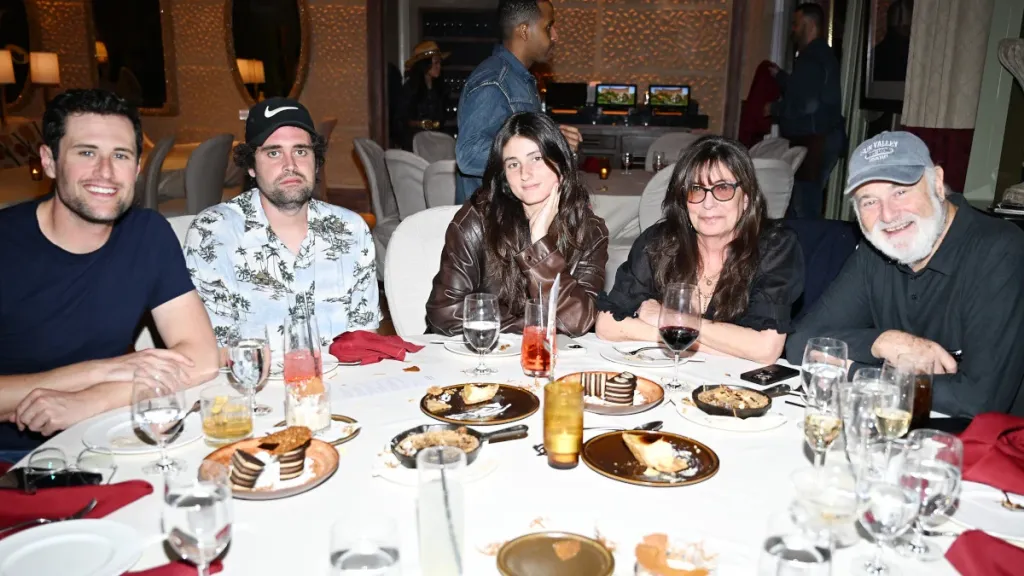
Long before photos of late-stage Nick Reiner’s look of ominous darkness – no doubt the face he wore at the Conan O’Brien Christmas party where his presence made a scene on Saturday night – were circulated around the internet, actor Nick Robinson channeled that energy for the opening shot of “Being Charlie” as his downbeat housemates sing him happy birthday.
“Charlie, why don’t you tell us what you want to thank God for and close your eyes and make a wish?” the sober-living director says. “Six months of sobriety? Nothing you want to say?”
Charlie glares at her, turns back around, and blows out the candles without a word.
Smashing the church window
Charlie Mills has had enough of the Heber Valley Recovery Ranch in Utah, and the following morning, sneaks out the door. But before he crosses the outer gate, he turns around, walks up to the chapel and hurls a large rock through a dazzling stained-glass window bearing a technicolor crucifix.
Erratic bouts of violence had marked Nick Reiner’s entire young adult life, even long after “Being Charlie” was made. He told the host of the “Dopey” podcast in 2018 that the year before, he rampaged through his family’s guest house, holed up for days with cocaine and other substances, repeatedly punching the television and damaging furniture until “just everything got wrecked.”
Stealing drugs from a Good Samaritan
Hitchhiking his way back to Los Angeles, Charlie is picked up by a scruffy man in a truck whose cancer-stricken mother is groaning in the backseat. The man stops to drop his mother off at her house – where Charlie steals a bottle of Oxycontin from the woman’s medicine cabinet. He’s caught with the pill bottle and tossed back out onto the dusty road.
The scene illustrates the classic conundrum for anyone who tries to help out a desperate addict – the more you give, the more they take. So it was for Nick Reiner, whose parents tried for years to strike that balance.
“These poor people did everything to help this kid,” one family friend, who lives a few blocks away from the Reiner home, said after the murders.
… Aaron Carter?
Finally back in California, Charlie is picked up in Barstow by his best friend Adam, a drug user and ne’er-do-well himself. Adam eggs him on to do an impromptu rap, and Charlie begrudgingly obliges:
“Finally clear-headed, but not sober/ I’m the smartest kid around without a high school diploma/ and I keep getting smarter, if you wanna fuck with me … Aaron Carter.”
Adam jabs him for the clumsy couplet, and Charlie says simply that he was cornered into it with the previous line ending in “smarter.” But it was also a foreboding reference, as Carter – who was alive at the time the film was made – struggled with much the same circumstances as Nick Reiner.
The notorious pop singer and rapper’s escalating addiction and behavior, including threats to harm and kill loved ones, mental illness and an obsession with weapons, got so bad that in 2019 his older brother – Nick Carter – obtained a restraining order.
In 2022, when Aaron Carter was 34, he died of accidental drowning with the effects of an inhaled aerosol propellant and Xanax listed as factors.
A Stormy Intervention
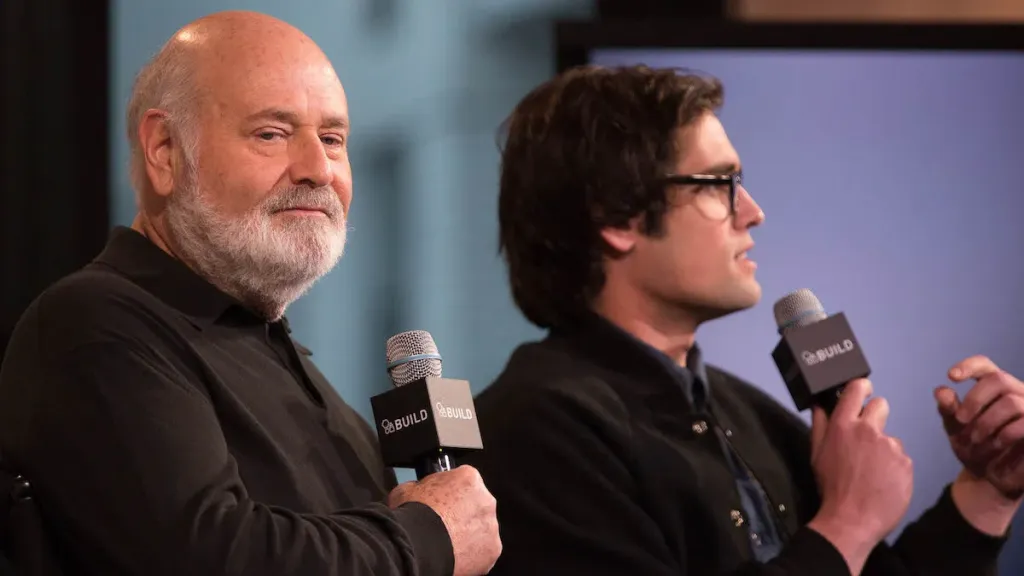
Charlie and Adam make it back to the Mills’ family home in Los Angeles, a luxurious compound nestled behind a high-security gate – similar to the Reiners’ home in Brentwood. His mother and father are seated on a couch with an intervention specialist who’s ready to take him back to yet another inpatient facility. Charlie is furious and lashes out at his dad.
“How many times do I have to tell you, those places don’t work for me?” he screams.
“Your mother and I have already decided,” his father sternly shoots back. “You can either go back to treatment, or back to the streets. It’s your choice.”
Charlie snarls: “That’s an easy one.”
Rob Reiner repeatedly said on “Being Charlie” press tours that he sometimes regretted listening to addiction experts’ advice to remain in a tough-love stance, and came to agree with his son that rehab just wasn’t doing the trick for him.
In the film, Charlie relents, and is back in an L.A. facility – if begrudgingly.
“The only disease I have is this place,” he snaps at a counselor during a group session. “It makes you feel like a fucking leper, and then when you get out, everyone expects you to fuck up again so you start using. It’s like, you hold our heads underwater and then they come down on us for trying to come up for air. You’re not slinging dope, you’re slinging false hope and serenity.”
‘Yo ho-ho-ho, the Battle Has Begun’
David Mills and his wife Liseann (played by Susan Misner) are having lunch at a fancy L.A. spot when a retiree sees him from a few tables away, walks up and asks for a selfie.
“I’m sorry Mr. Mills, I just want to shake your hand,” the man says. “We’re all pulling for you. I’m a big fan of your films!”
In a moment that surely seemed innocent in 2015, the man then picks up a knife, brandishes it at Mills, and recites his pirate character’s phrase: “Yo ho-ho and the battle’s begun!”
Mills also grabs a knife and the two playfully swashbuckle for a moment.
In an earlier scene, while Charlie is sitting at a table outside the inpatient facility, a fellow patient confronts him gleefully: “Are you David Mills’ son?”
He admits that he is – whereupon another patient grabs him from behind and pretends to slash him in the neck: “Yo ho-ho-ho-ho, the battle has begun! I fucking love that,” the man gushes.
Don’t leave Charlie alone
David Mills and his wife are serving food at a picnic when the campaign manager informs them that their whistle-stop tour will continue unabated.
“Wait, I thought we were going back to L.A. before picking back up?” she whispers to David, who looks irritated. “You knew about these dates honey,” he growls at her.
“But Charlie is getting out of inpatient,” she says, concerned.
The scene echoes the reason Nick Reiner was at the Conan O’Brien holiday party – according to multiple media reports on Tuesday, the couple didn’t want to leave Nick home alone, and politely asked the host if he could tag along.
Charlie’s public contempt for his father
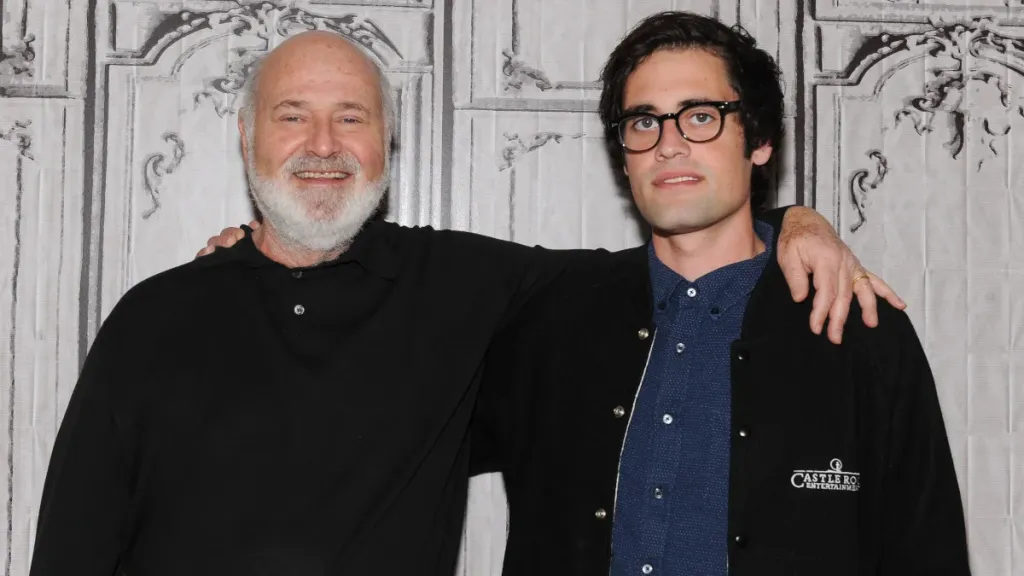
On multiple occasions, Charlie openly speaks about how much he hates his father.
During a role-playing session in rehab, a fellow patient is playing David Mills, saying to Charlie: “Son, you’ve been nothing but a disappointment to me.”
A counselor says: “Charlie, do you have anything you want to say to your dad?”
Blank-faced, Charlie replies: “I dunno. Fuck you?”
During a halfway-house talent show, Charlie is dusting off his standup routine.
“I know what you’re thinking, who is this person with the silver spoon in his mouth, and why does he keep putting heroin in it?” Charlie jokes. “Total waste of a good utensil. So yeah, my dad’s a piece of shit. I don’t have a joke, just wanted to say it.”
From dagger-eyes to dagger references
After weeks of sobriety and good behavior, Charlie earns an overnight pass from the halfway-house leader, approved and facilitated by his mom (behind David Mills’ back). She brings him her car and the keys to the family beach house, where Charlie brings Eva – his new girlfriend, a fellow now-outpatient – and she is stunned by the opulence of the “second home.”
“You’ve got to stab a lot of people with fake swords to get this,” Charlie remarks.
More smashed windows, swords and shouting matches
At one point, Eva runs away from the halfway house to begin using again – and Charlie chases after her. His first stop is to his parents’ house, where he smashes a window to gain entry and steal a car from the garage. But his parents are home.
Hearing the noise of glass breaking, David picks up a fire poker and brandishes it like a cutlass – knowingly – as he approaches the parking area of the compound, where he finds Charlie about to drive off.
The discussion is heated.
“Is this how you want to live your life? Huh? Messing things up so that daddy has to keep cleaning up after you?,” David shouts. “Keep blaming other people for your shit. Why can’t you just be honest and own something for once?”
The look of rage is back on Charlie’s face.
“Honesty, I’m glad you brought that up, Dad. You know I was never a big fan of your pirate movies, but that sociopath you played on the phone with that Utah bullshit, that was spot-on,” he says, referring to an earlier moment when David lied to Charlie about possible charges for the window-smashing incident.
Big brother Jake’s cameo
In a pair of blink-and-you’d miss them (but spot-on) cameos, Jake Reiner, Nick’s older brother, plays a local Fox 11 News anchor who is interviewing the Mills in their home.
“Now with a political campaign of this magnitude, it’s got to take some toll on your family,” he says, looking every bit the polished talking head. “So can I ask, how’s your son holding up?”
The Mills give different answers as they talk over each other:
“He’s had a hard time,” Liseann says, while David interrupts: “We spoke to him this morning and he’s doing just fine.”
Reconciliation at the beach house
David Mills has won the governorship in a squeaker and, looking for Charlie, finds him at the beach house. The son is in the middle of cleaning up the broken glass from a pair of wine bottles he smashed in anger after Eva snuck away. Mills, clearly in no mood to fight, doesn’t flinch:
“I know you’re angry at me, and you probably don’t want to hear this right now, but I do love you,” he tells Charlie, who for the first time in the film is not glaring at his father. “Look, I’m sorry. Every expert with a desk and a diploma told me I had to be tough on you. But every time we sent you off to another one of those programs, I saw you slipping away from us. And all I could tell myself was, I’d rather have you alive and hating me than dead on the streets. So what do you want me to do? Tell me what to do.”
Flatly, Charlie says: “You don’t have to do anything.”
“You want to come up to Sacramento? Get away from all the … “
“What? The drugs?,” says Charlie, back on defense. “It was never about the drugs. All I wanted was … a way to kill the noise. But the more I used, the louder it got.”
David looks down at the ground. “I was part of the noise, wasn’t I?”
Charlie makes the sign of “a little bit” and turns his back.
“So. What are you going to do?” David asks.
“I don’t know. I’ll figure it out,” Charlie replies calmly, then, grabbing his backpack to leave, turns back around and says to his father: “I don’t hate you. I don’t.”
The two share an at-first awkward embrace as tears well up in David’s eyes.
“You take good care of yourself, OK?” he says.
And the credits roll.
The post 11 Moments From ‘Being Charlie’ That Foreshadow the Reiner Family Tragedy: Knife-Play, Dagger-Glares and Big Blowouts appeared first on TheWrap.