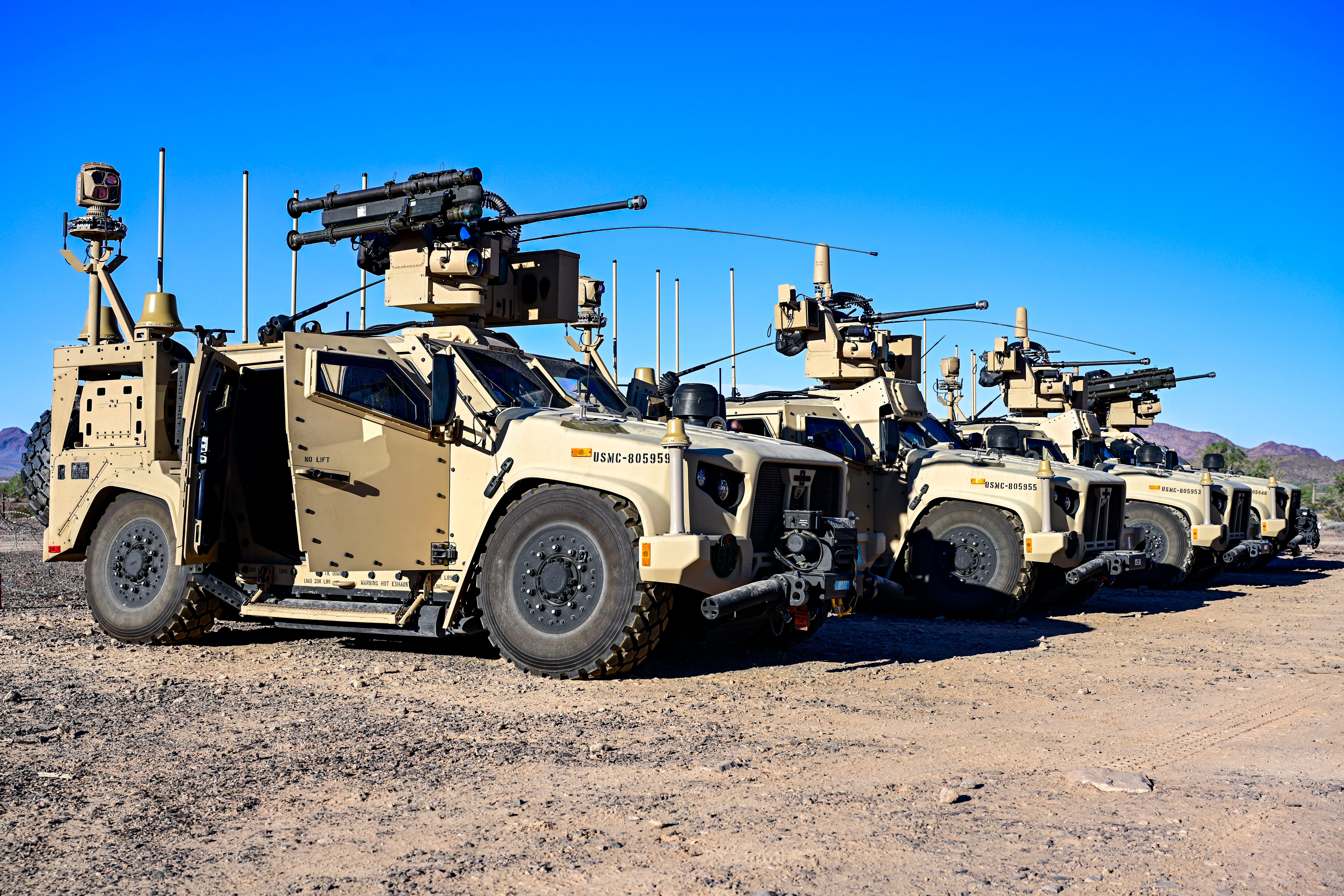
The Marine Corps has a new air defense system built to transform light vehicles into mobile weapons for shooting down drones and other aircraft.
The technology is intended to equip Marines with a new way to deal with drones and other aerial threats, the service announced this week. As the war in Ukraine has shown, the ability to counter these types of threats is critical in modern conflict.
The new Marine Air Defense Integration System, or MADIS, entered full-rate production earlier this fall after training and live-fire exercises. Placed on top of a pair of Joint Light Tactical Vehicles, MADIS converts the vehicles into a single short-ranged ground-based air defense system.
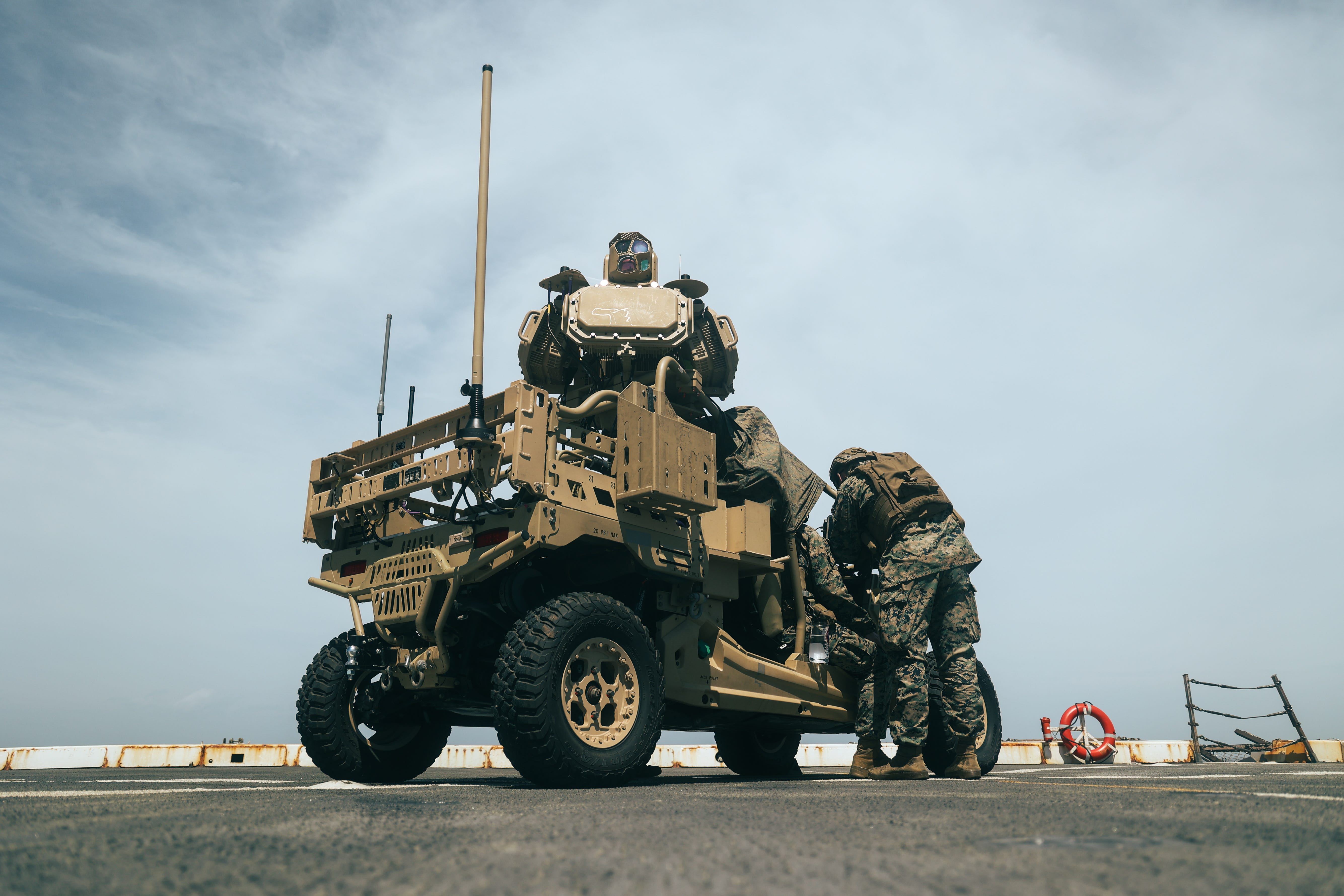
The vehicles work together, with one focused on countering drones and the other geared toward helicopters and fixed-wing aircraft. MADIS uses Stinger missiles and a 30mm cannon for those targets, and it also comes with radars and electronic warfare systems. Marines can also use MADIS while on the move, giving the service a mobile air defense option.
It’s a capability boost over the service’s Man-Portable Air Defense System, or MANPAD, which Marines would’ve had to equip themselves and leave vehicles to use. MADIS is also capable of being upgraded over time, depending on what types of threats Marines are facing and what weapons they need for specific missions.
MADIS, developed by the Norwegian firm Kongsberg Defense & Aerospace, has undergone several iterations since its initial prototype. The Marine Corps said its full-rate production version has sensors, algorithms, and mobility that allow Marines to locate, target, and destroy threats faster and better than before. Its first live-fire exercise took place during joint US-Philippine military training earlier this year.

Marine Corps officials have said MADIS fills a gap in their air defense arsenal and is unique because it can complete the entire kill chain. Marines can use it to find and identify targets and then take them out rather than relying on several systems to do the same.
MADIS also addresses Marine Corps concerns around how to defeat small uncrewed aerial systems in a potential future war.
Since MADIS is mobile, it gives Marines a new way to defend forward-deployed forces — especially in a potential future fight against a sophisticated adversary like China.
As the Marine Corps reshapes its force for operations across the first island chain, from Japan to Taiwan to the Philippines, it needs systems that can move quickly and deliver more firepower against a wide range of aerial threats.
Read the original article on Business Insider
The post New tech will soon be turning Marine light vehicles into roaming drone- and aircraft-killers appeared first on Business Insider.