There was a surplus of memorable, awards-worthy performances given on screen in 2025. Looking back on the year, it is almost easy to be overwhelmed by one’s number of choices. To even make a list like this is to accept that honorable mentions will have to be made. This year, those include Wagner Moura and Rose Byrne’s star turns in two of 2025’s best films, “The Secret Agent” and “If I Had Legs I’d Kick You,” as well as Jesse Plemons and Emma Stone’s dueling performances opposite each other in Yorgos Lanthimos’ “Bugonia.”
“Hamnet” will, of course, be featured on this list, but the breakout, devastating performance given by young newcomer Jacobi Jupe as its doomed protagonist will not. As impressive as all of those turns were, none of them left as lasting of marks as those listed below. So, without any further ado, here are the 11 best movie performances of 2025.
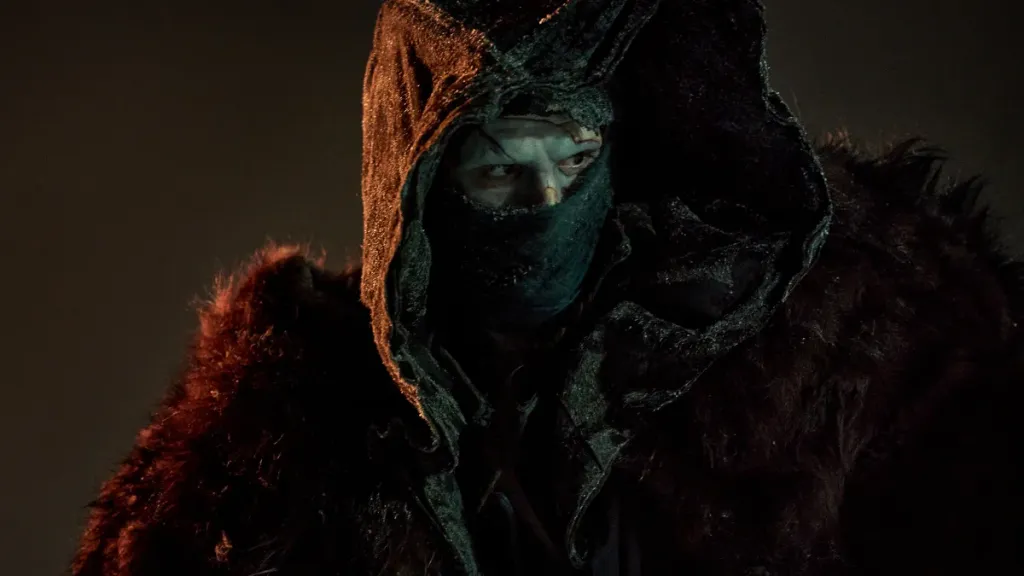
Jacob Elordi, “Frankenstein”
It may seem obvious going into Guillermo del Toro’s “Frankenstein” that the film will ultimately side with and afford the most tenderness, like so many of its maker’s past films, to its central monster. It nonetheless feels like a revelation when an unrecognizable Jacob Elordi, buried underneath layers of pale blue and white prosthetics, emerges as the film’s heart and soul in its second half. That is a testament to not only del Toro’s seemingly endless reserves of empathy for fiction’s greatest outcasts but also the affecting, infectiously open-hearted performance Elordi gives as the immortal Creature made by Oscar Isaac’s Victor Frankenstein.
Elordi’s performance is a wonder of careful, immersive physicality and expressive, unspoken emotions. Much of his character’s lines of dialogue are reserved for voice-over narration, an approach which forces Elordi to communicate his character’s journey from newborn wonder and fear to disillusioned rage and back to optimistic yearning through purely his eyes and movements. To say he does so would be an understatement. Working in tandem with del Toro’s script, Elordi transforms Mary Shelley’s enduring cautionary tale about mankind’s arrogance into a moving tale of identity, of learning to see oneself through the eyes of those who love them rather than those who wish to control them. If it does nothing else exceptionally well, “Frankenstein” cements Elordi as one of the most intriguing and promising young male performers of his generation. — Alex Welch
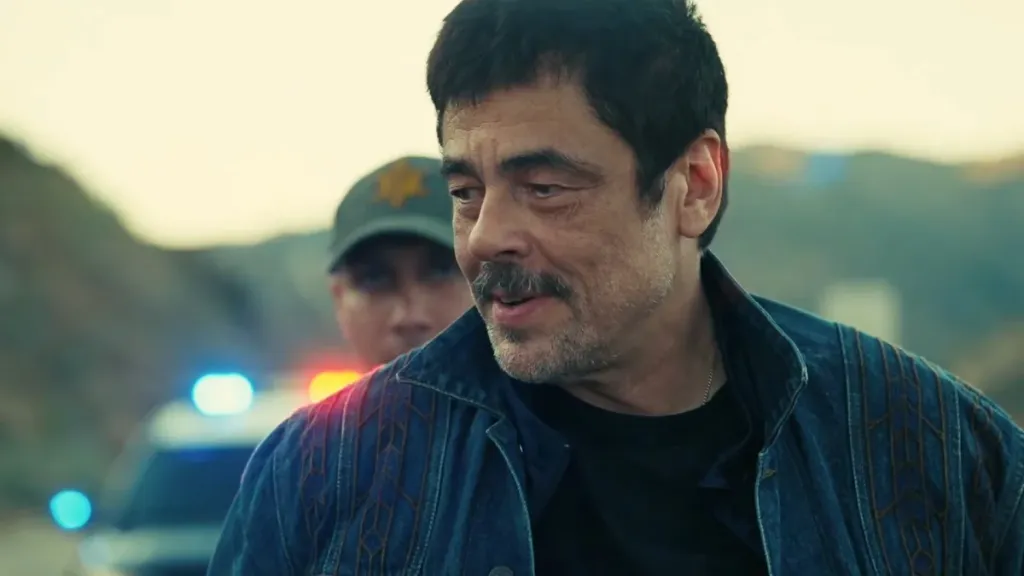
Benicio del Toro, “One Battle After Another”
It is difficult to choose just one leading man performance from writer-director Paul Thomas Anderson’s “One Battle After Another” to spotlight on a list like this. How does one watch that film and not choose Sean Penn’s animalistic, appropriately cartoonish performance as its villain, Steven J. Lockjaw? Or Leonardo DiCaprio’s anxiety-riddled, relentless turn as terrified, out-of-his-depth father Bob Ferguson? And yet, for reasons that may not seem initially clear, it is Benicio del Toro’s against-type performance as paternal, part-time karate sensei and full-time immigrant protector Sergio St. Carlos that stands out the most in “One Battle After Another.”
DiCaprio and Penn’s performances may be wildly different, but they operate at a similar, heightened pitch, one intended to reflect the purposefully over-the-top, deranged tone and vibe of the film itself. The same is true for many of the movie’s key performances, with del Toro’s being one of the rare exceptions. Despite sharing nearly all of his scenes with DiCaprio, del Toro never adopts the same energy as his screen partner. He holds onto his character’s calm, collected persona through every setback, rescue attempt and overheard, manic phone call. He effortlessly embodies his character’s “ocean waves” mantra and, in doing so, ensures that Sensei Sergio emerges as “One Battle After Another’s” most original and memorable creation — a karate master who preaches the merits of playing defense in an assaultive world. — AW
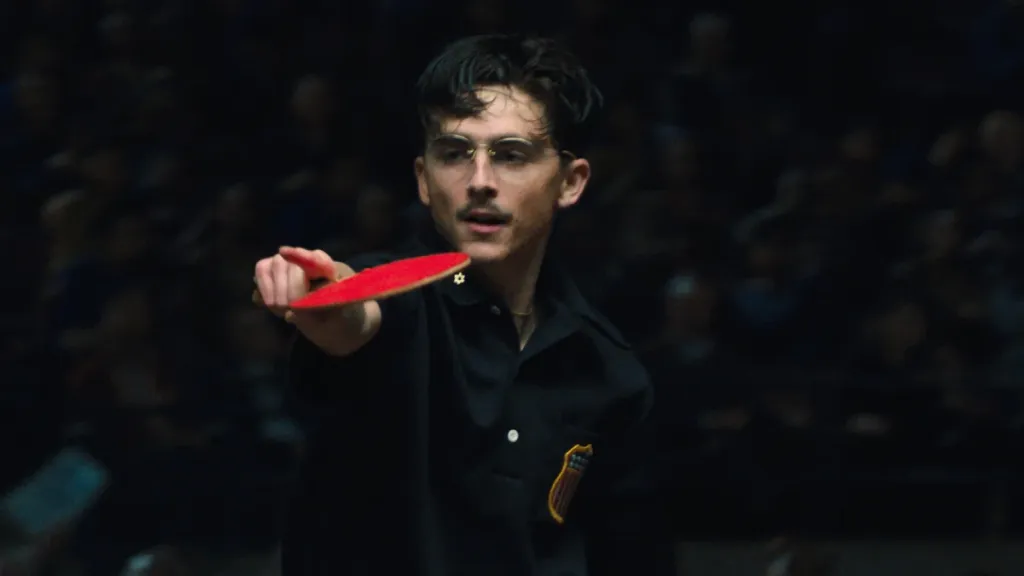
Timothée Chalamet, “Marty Supreme”
The “Marty Supreme” press tour has certainly given us plenty of reasons to poke fun at Timothée Chalamet – from the self-mythologizing around the years of preparation he supposedly spent on the role (you know he had a ping-pong table on Arrakis) to his admission that “this is probably my best performance,” it’s been a whirlwind. (This is putting aside the conspiracy theory that Chalamet has gone undercover as a British rapper. Yes, seriously.) But here’s the thing – he really is that good in “Marty Supreme.” As Marty Mauser, a shoe salesman who dreams of ping pong glory in postwar Brooklyn, the actor is as electric as he’s ever been, whether it’s pin-balling around the city, just out of reach of trouble, or attempting to seduce a bored movie star (Gwyneth Paltrow).
Chamalet has the physicality, both while playing table tennis and with everything else he does. You can’t help but be mesmerized. But it’s everything else about the performance, the way those wheels are always turning inside as he’s trying to plot his next scheme, that makes the performance. He radiates both confidence and quiet desperation in every scene – in the way he speaks and moves and looks around the room. It’s a magnificent performance, full of broad gestures and small, almost imperceptible tics. It’s the clearest example of Chalamet, not only as the endlessly radiant global movie star but as one of the best actors of his generation. And he’s not even 30 yet. — Drew Taylor

Jessie Buckley, “Hamnet”
Jessie Buckley’s lead turn in director Chloé Zhao’s Shakespearean heartbreaker “Hamnet” may very well end up being this year’s most celebrated and widely decorated film performance. If that turns out to be the case, then it will be justified. Buckley’s performance in “Hamnet” as Agnes Hathaway, the wife of Paul Mescal’s William Shakespeare, is not just emotionally affecting; it is shattering. The actress takes what is, on paper, a sketch of a character and imbues her with a kind of primal power, one strong enough to support the film’s many attempts to paint its key events as elemental, mythic moments.
Buckley is given her fair share of blockbuster scenes throughout “Hamnet,” the death of the film’s eponymous character and Agnes’ guttural, tortured scream after he has passed being the biggest of them all. But it is the totality of Buckley’s performance, the way she seems to be so totally, emotionally present in every moment, that makes “Hamnet” hit as hard as it does (and it does). It is her performance that makes a gesture as simple as the reaching forward of her hand in a climactic moment take your breath away as swiftly as any musical swell. “Hamnet” is an epic, a film filled with questions about death, mortality, art and the meaning of life itself. In Buckley’s face and her searching, unwavering eyes, it finds the answers. — AW

Chase Infiniti, “One Battle After Another”
If you are one of the many who believe it is Teyana Taylor who shines the brightest in “One Battle After Another,” you will not find much argument here. It is, however, newcomer Chase Infiniti’s breakout turn as Willa Ferguson, the steadfast daughter of Taylor and Leonardo DiCaprio’s former revolutionaries, that seems to grow only more impressive every time one revisits “One Battle After Another.” Across the film’s 162 minutes, Infiniti’s character is forced to fight for her life, all while having the truth she’d long accepted about her parents be violently ripped out from under her. Infiniti, for her part, communicates that journey — Willa’s slow but sure path toward finding herself — with the kind of vulnerability and fearlessness of someone typically with far more screen-acting experience than her.
Paul Thomas Anderson is, of course, no stranger to capturing breakout performances on screen. As was the case with Vicky Krieps’ unforgettable, flash bulb performance opposite Daniel Day-Lewis in Anderson’s 2017 masterpiece “Phantom Thread,” there is something astonishing about how assured Infiniti seems on screen in “One Battle After Another,” her very first feature film, despite sharing scenes with more accomplished veterans like DiCaprio and Sean Penn. She does not just hold her own opposite them. In some instances, she outshines them altogether. — AW
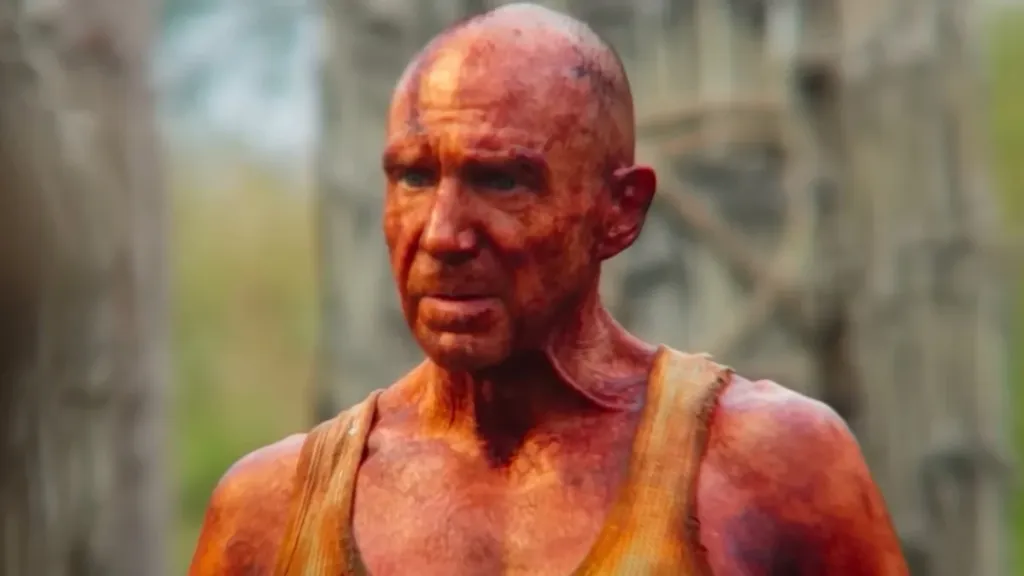
Ralph Fiennes, “28 Years Later”
“28 Years Later” is a brutal, grisly film full of bloated zombies with red eyes that crawl along the forest floor, and yet there is a tender, beating heart at the center of it all. That contradictory dichotomy crystalizes in the film’s third act, when Ralph Fiennes arrives as Dr. Ian Kelson, a man whose skin has been tinted orange by the infected-repellant iodine he covers himself in and who has spent years building a literal temple out of dead humans’ skulls and bones. It is not that Kelson so much washes away the death, decay and gruesomeness of “28 Years Later” but rather that he recontextualizes it.
His reverence for humanity and yet blunt acknowledgment of mortality transforms “28 Years Later” from a horror film about the death of the post-Brexit British Empire into a profound eulogy for it — one which contends that you can accept the death of something while also honoring it. The film, in other words, asks Fiennes to become the walking embodiment of its themes and ideas, and he does so with an assured, soft-spoken grace that elevates and sharpens the entire film around him. There are few line readings this year guaranteed to haunt you as long as when Fiennes looks at Alfie Williams’ young, grieving Spike and murmurs just seven words. “Memento amoris. Remember… you must love.” — AW
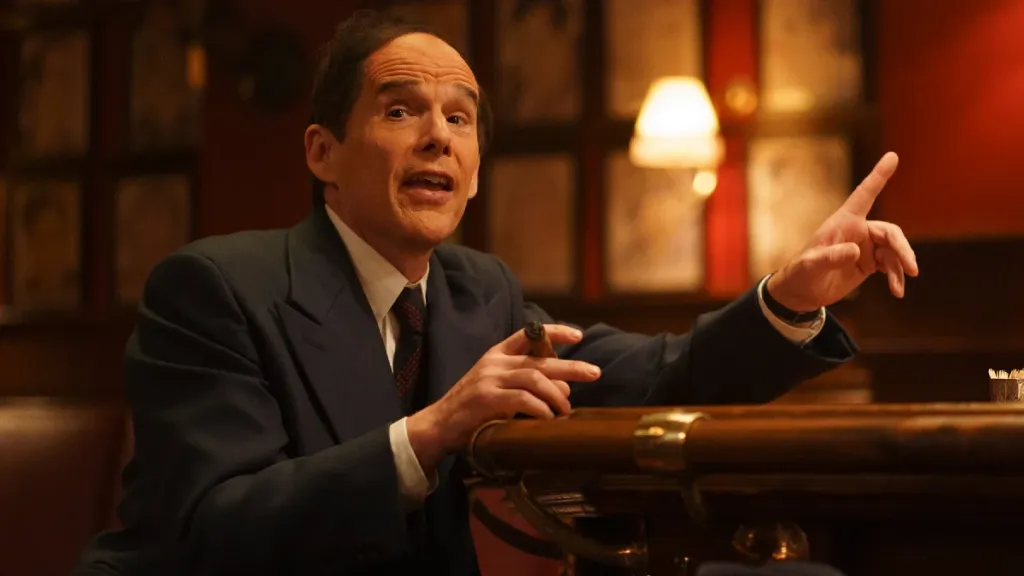
Ethan Hawke, “Blue Moon”
Leave it to Richard Linklater to unlock new sides of frequent collaborator Ethan Hawke on screen. The latter has been turning in memorable big-screen performances for decades now, but he has never played someone like “Blue Moon” lyricist Lorenz Hart before. Not only does the character, with his exaggerated comb over and short stature, look physically unlike Hawke, but his desperate, needy demeanor flies in the face of the actor’s laidback Gen X persona. None of that matters. In “Blue Moon,” Hawke transforms himself into Hart, turning in a performance that is itself performative.
His Hart swallows up much of the dialogue in “Blue Moon,” which at times feels like a one-man show. He speaks as if he is terrified of a single pause, setting up card tricks he never performs and pleading, if indirectly, for someone to give him the love and admiration he reckless affords so many others. He never finds that, and the way Hawke lets that growing realization slip through his character’s outward bravado is one of the more impressive and quietly affecting things you could see on screen in 2025. It is one of Hawke’s most daring and best performances — vain and yet vanity-free, charismatic and yet exhausting all at once. — AW

Renate Reinsve, “Sentimental Value”
You could choose to single out any one of the performances given by the leads of director Joachim Trier’s earnest new family drama “Sentimental Value.” But it is in Renate Reinsve’s interior, turbulent performance as Nora Borg, the talented but tortured actress and daughter of acclaimed, distant director Gustav (Stellan Skarsgård), that the film finds a home for all of its ideas about generational trauma and long-term emotional instability. Trier learned in his previous collaboration with Reinsve, 2022’s “The Worst Person in the World,” that he could find magic in simple, silent shots of the actress smoking a cigarette or walking along an Oslo street alone.
He builds on that discovery in “Sentimental Value” and asks Reinsve to give a more difficult and elusive performance this time around. With the severity of her character’s struggles not revealed until the film’s penultimate scene, “Sentimental Value” relies on Reinsve’s ability to communicate Nora’s slow spiral into herself through quiet, solitary moments. Fortunately, Reinsve rises to the challenge and gives a sophisticated, reserved performance that could only exist in a film like “Sentimental Value,” which makes the most out of every one of Reinsve’s wide-eyed, yearning looks and disappointed, resigned nods. As a result, the actress does not just endear herself to you. She demands your attention. — AW
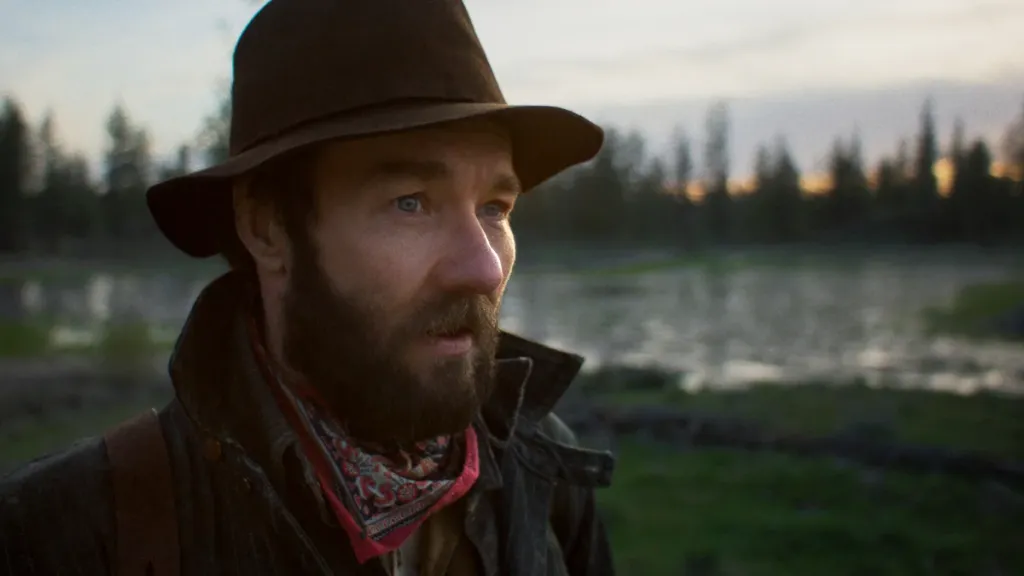
Joel Edgerton, “Train Dreams”
Joel Edgerton makes the difficult look easy in “Train Dreams,” director Clint Bentley’s kaleidoscopic adaptation of author Denis Johnson’s 2011 novella of the same name. The film charts the entire life of Robert Grainier (Edgerton), a soft-spoken logger who works on some of America’s earliest railways at the turn of the 20th century and witnesses horrific acts of racial violence as well as the transformation of first an entire industry and later an entire country. Grainier is an everyman in every sense of the word. He is a blue-collar worker who spends much of the film — like many — just trying to make it through each day.
“Train Dreams” never tries to make its protagonist into more than he is, a man who lives a largely ordinary life. It populates the outer edges of its story with more eccentric, distinct figures, like William H. Macy’s demolition expert Arn, but it finds its cumulative power in the simple, workman-like ways Edgerton moves, speaks and grieves, and in the soft, undemanding gaze of his eyes. At its worst, “Train Dreams” had the potential to come off as polished, inauthentic blue-collar cosplay. It thankfully doesn’t, and that is due in no small part to Edgerton, to the lived-in, deeply felt humility of his performance. — AW
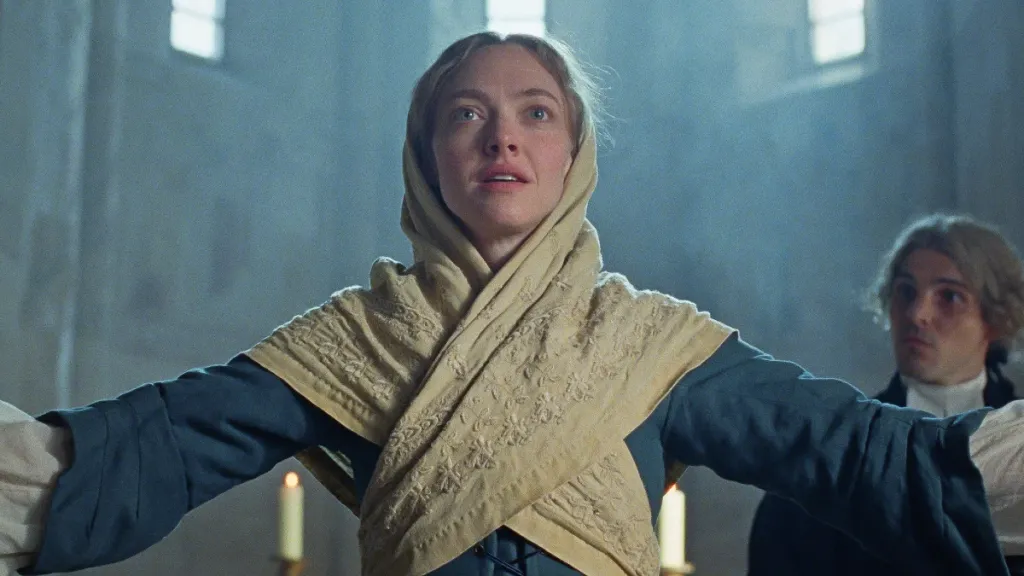
Amanda Seyfried, “The Testament of Ann Lee”
Amanda Seyfriend has long been one of our finest actresses, as she quietly inhabits her characters, gliding through genres and styles effortlessly – so effortlessly, in fact, that she is often overlooked or undervalued. (Doing those Seth MacFarlane movies probably didn’t help.) But the tide is turning, as we appreciate our understated queen. First, she got an Oscar nomination for her wonderful turn as Marion Davies in David Fincher’s “Mank.” And she’s back this year with a true showstopper of a performance – the title role in Mona Fastvold’s “The Testament of Ann Lee.” As the title character, the founding member of the Shaker religious movement, Seyfried goes through it, first as a put-upon wife whose endless pregnancies always end in the death of a child, to a religious leader who establishes a zealous community in the new world.
What sets the performance apart from a traditional biopic is the fact that the movie is also a musical, with new arrangements derived from traditional Shaker chants. Seyfried sings, for sure, but it’s the way she moves that is really spectacular – the choreography allows for a kind of fluid, shapeshifting modernity. (New York Magazine critic Bilge Ebiri described it as “like ‘The ‘Witch’ meets ‘Andrei Rublev’ meets ‘Rhythm Nation.’”) It’s incredible stuff – dazzling and vulnerable and deeply emotional. Seyfried’s performance turns what could have been something more conceptual into a piece that is richly felt and extremely detailed. You would probably call it “fearless” if it was any other actress. But it’s par for the course for Seyfried. She’s got the moves. — DT
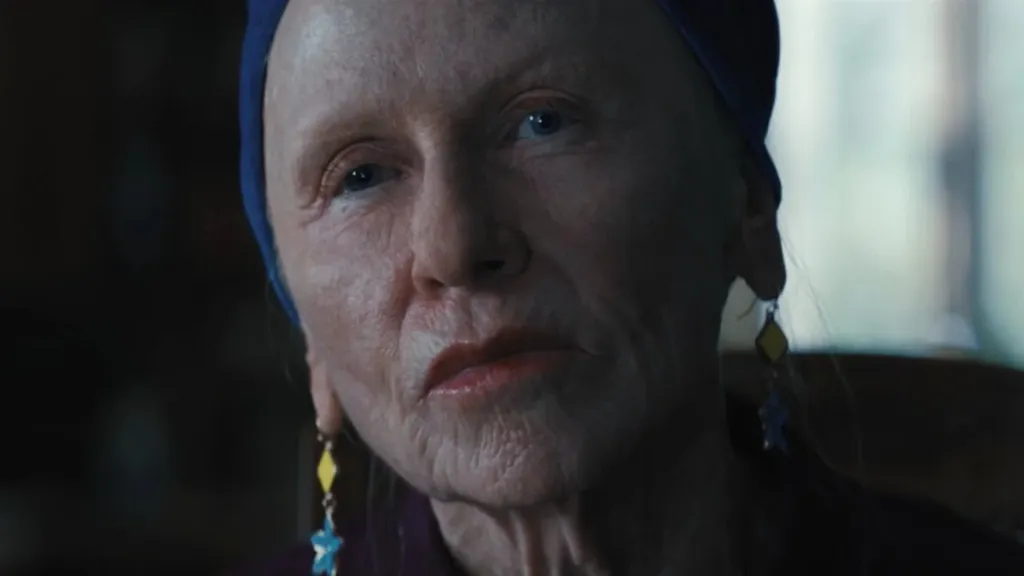
Amy Madigan, “Weapons”
For much of writer-director Zach Cregger’s “Weapons,” Amy Madigan’s clown-faced witch Gladys is the insidious specter lurking in the distance. Throughout the film’s first half, her screen time is largely limited to brief, rattling appearances in confused characters’ dreams. She is the unseen puppet master responsible for all of the film’s many horrific happenings. There is an easy-to-imagine world in which her eventual unveiling could have robbed the character of all of her mysterious power, as so often ends up being the case in horror movies like “Weapons.” Instead, the opposite proves to be true here.
Madigan’s performance reflects and leans into the film’s horror comic tone, alternating between high-pitched, clown-faced glee and steely, parasitic intent. There are many uncanny, unsettling horror images scattered across “Weapons,” but few scenes linger as long as when Gladys threatens her young nephew with unimaginable harm to his parents if he does not follow her orders. Cregger frames the moment as a simple close-up on Madigan’s unadorned, unmoving face. Why? Because he knows the actress is commanding enough to terrify you all on her own. “Weapons” is a film fueled by existential concerns — about the state of the American family, the American suburb, American schools — and Cregger chooses to put a human face to its horrors. Madigan, who is at her most unrecognizable in “Weapons,” turns out to be more than up to the task. — AW
The post The 11 Best Movie Performances of 2025 appeared first on TheWrap.