December has a way of pushing people indoors. Heavy food, long nights, way too many boozy eggnogs. But the sky does something different over the Christmas holidays. It opens up. The long darkness works in your favor, and the universe puts on a run of sights that don’t ask for anything except a jacket and a few minutes of attention.
From December 20 through the first days of January, the Northern Hemisphere gets a stacked lineup. Bright planets, familiar constellations at their best, a supermoon, and even a couple of meteor showers. You don’t need a telescope for most of it. You just need to bundle up and step outside.
Here are ten good reasons to look up this Christmas season…
1. Jupiter takes over the evening sky
About 90 minutes after sunset, Jupiter rises in the east and immediately steals focus. It shines with a steady intensity that makes everything else fade into the background. By early January, it reaches its brightest point of the year.
2. The winter solstice delivers peak darkness
December 21 brings the longest night of the year. Once the thin crescent moon sets, the sky goes properly dark, creating ideal conditions for stargazing that don’t come often.
3. The Ursid meteor shower sneaks in
The Ursids peak around the solstice. They aren’t like the Geminids, but on nights without a moon, you might spot a few bright and clear streaks if you stay up late.
4. Earthshine softens the early evenings
In the days before Christmas, the waxing crescent moon glows faintly on its dark side. That ghostly light comes from sunlight bouncing off Earth itself.
5. The International Space Station might photobomb Christmas Eve
If you time it right, the ISS can glide overhead as a bright, silent point of light. NASA’s tracking tools can tell you when to look.
6. Saturn pairs up with the moon
The first-quarter moon will sit near Saturn on December 26. The bright moon and Saturn’s steady light make them easy to spot together.
7. Orion finally gets center stage
Winter is when Orion looks immaculate. The Belt stands out clearly, and binoculars reveal the Orion Nebula, a star-forming region 1,300 light-years away.
8. The Christmas Tree Cluster earns its name
Using binoculars or a small telescope, you can see this young group of stars close to Orion. It’s dim, but its triangle shape makes it stand out in very dark conditions.
9. The moon brushes past the Pleiades
On New Year’s Eve, a nearly full moon rises close to the Seven Sisters. The glare washes out some stars, but the grouping remains striking.
10. The Wolf Supermoon closes the show
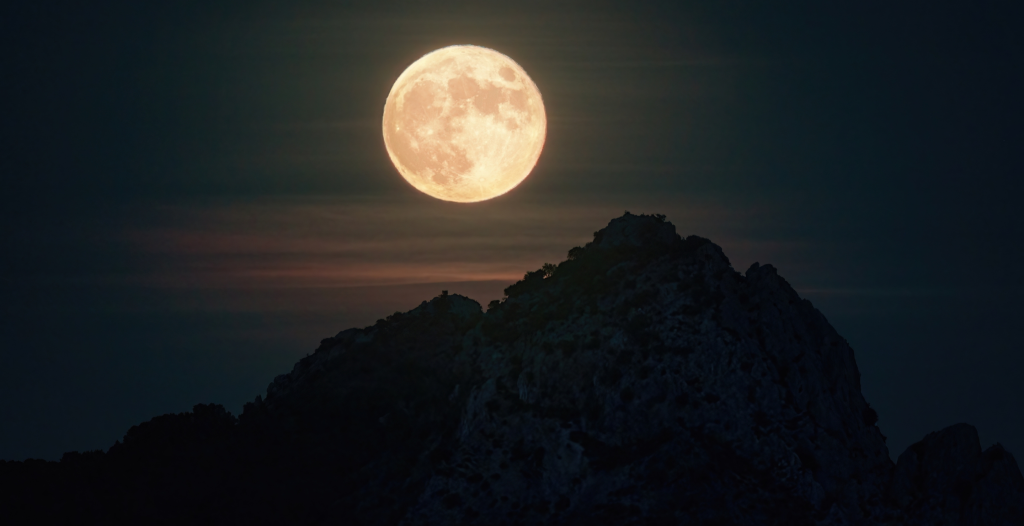
January 3 brings the final supermoon of the streak. Rising at sunset, it appears larger and brighter than usual, especially near the horizon.
If nothing else, the holiday skies can offer you some much-needed silence in the dark.
The post Your Complete Guide to Stargazing During the 2025 Holiday Season appeared first on VICE.