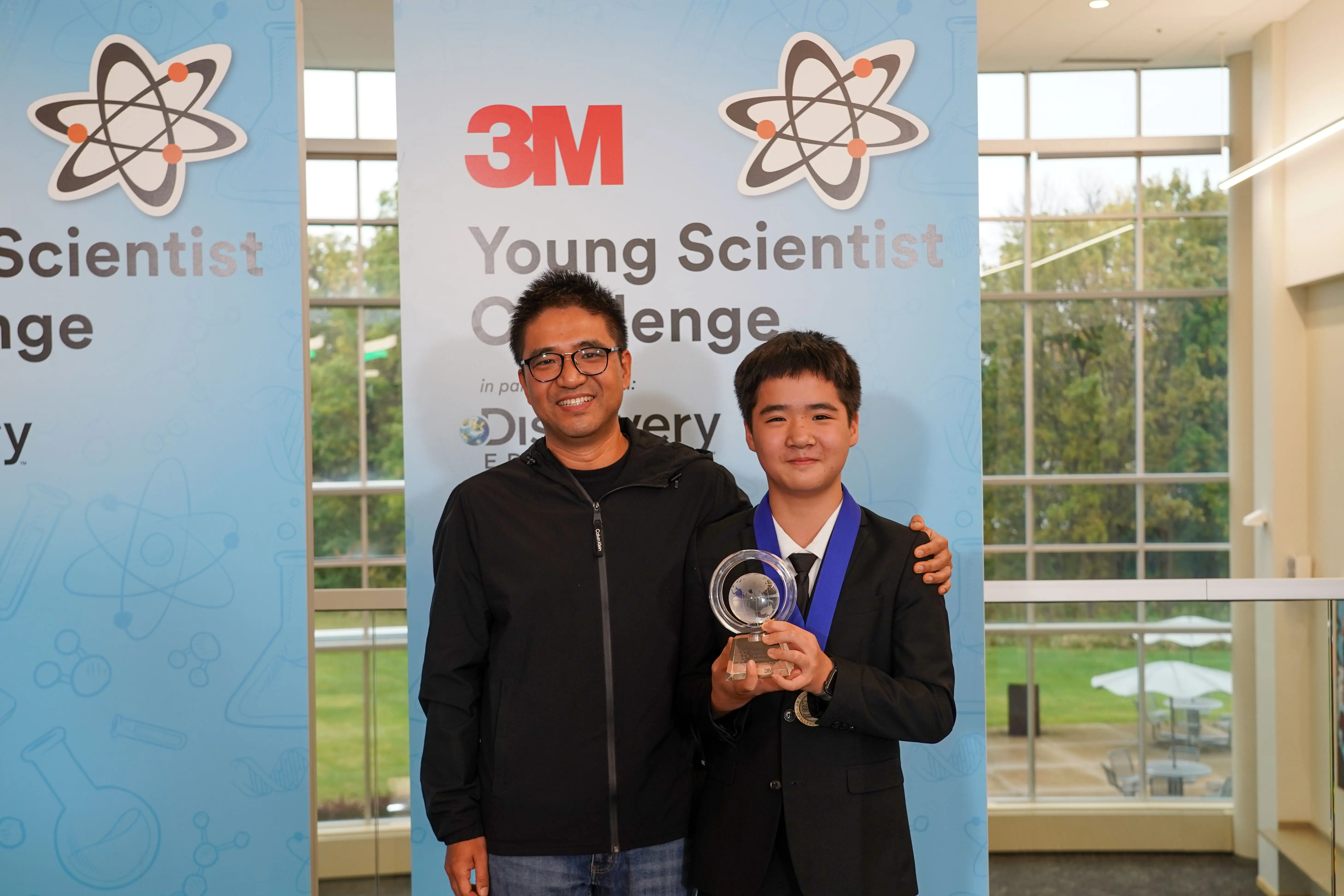
While many teens are using AI to help themselves with homework and socializing, Kevin Tang, 13, is using it to help others.
“A few years ago, my grandma sadly fell in my kitchen, and nobody noticed immediately,” Tang told Business Insider. By the time his family found her and called 911, “it was still too late, since she was left with permanent brain damage.”
He later learned that his friend’s grandparent had also fallen, and that the family hadn’t found out until the following day because they lived in another state.
After that, Tang felt compelled to find a way to help not just his family and friends, but the millions of older adults who suffer from falls each year.
BI’s Young Geniuses series spotlights the next generation of founders, innovators, and thinkers who are trying to reshape industries and solve global challenges. See more stories from the series here, or reach out to editor Jess Orwig to share your story.
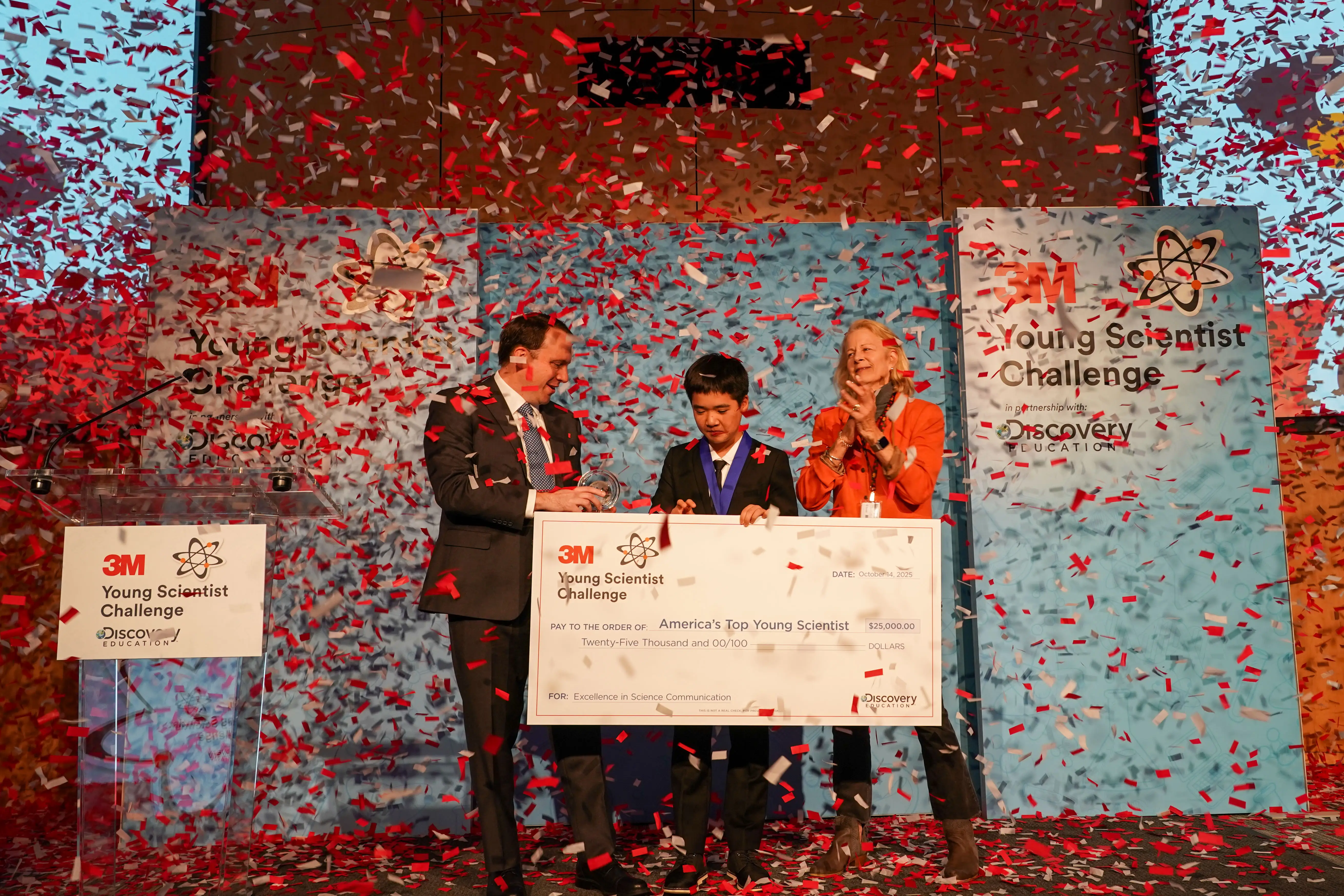
His project, FallGuard, earned him first prize at the 2025 3M Young Scientist Challenge and a cash prize of $25,000, which he said he has already partly reinvested in improving and growing the project.
How Tang’s award-winning AI project works
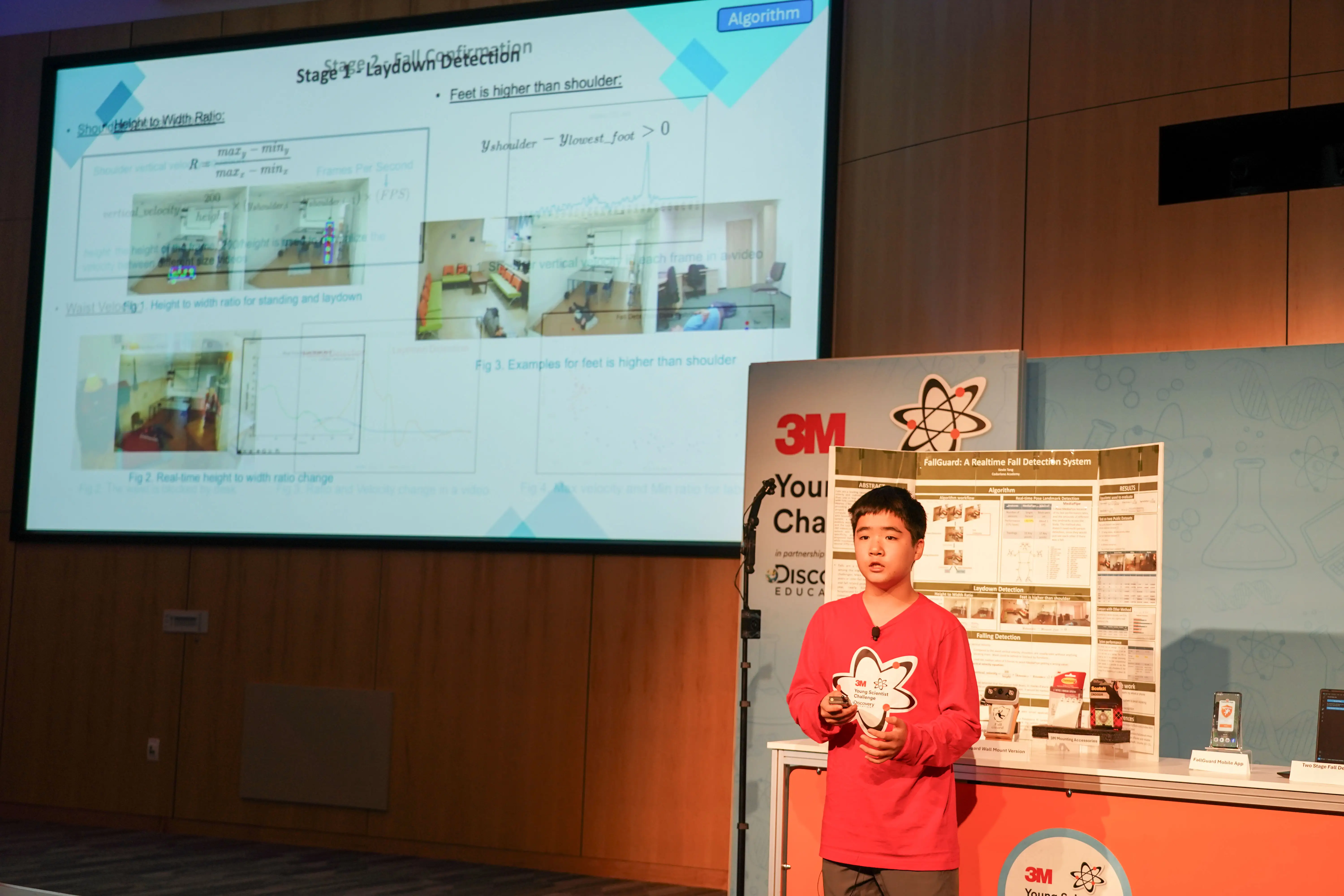
Tang started working on Fallguard in the summer of 2024. Since then, he has built and developed it into a device that uses AI to detect when a person falls in real time and immediately sends an alert to the person’s family members’ phones via the FallGuard mobile app. It can also detect when a person has been lying down for an extended period.
“This system does not rely on a cellular carrier and does not generate any messaging fees,” Tang wrote in a follow-up email. “A single FallGuard device can be linked to multiple phones so that several caregivers can receive alerts at the same time.”
Unlike wearable devices that you have to remember to charge and put on, FallGuard works via a camera connected to a computer. “You can just place [the camera] on the wall, and it works all the time,” Tang said, later adding that, “no video is recorded or uploaded, which helps protect privacy.”
A couple of limitations are that a person must fall within the camera’s field of view. Moreover, the camera must be connected to a computer with the FallGuard model, which can only support one camera at a time. Tang said he’s working on expanding the system so one device can support multiple cameras that could be placed all around a home. “So that way you don’t have to have multiple computers,” he said.
Tang built FallGuard using MediaPipe, a Google-developed AI library, which can map a person on screen by placing key points on their body. With a two-stage fall detection algorithm that Tang developed, FallGuard analyzes posture and movement over time. It does this via a common tool in computer vision models called bounding boxes that can track how a person’s body proportions change from standing to lying down, Tang said.
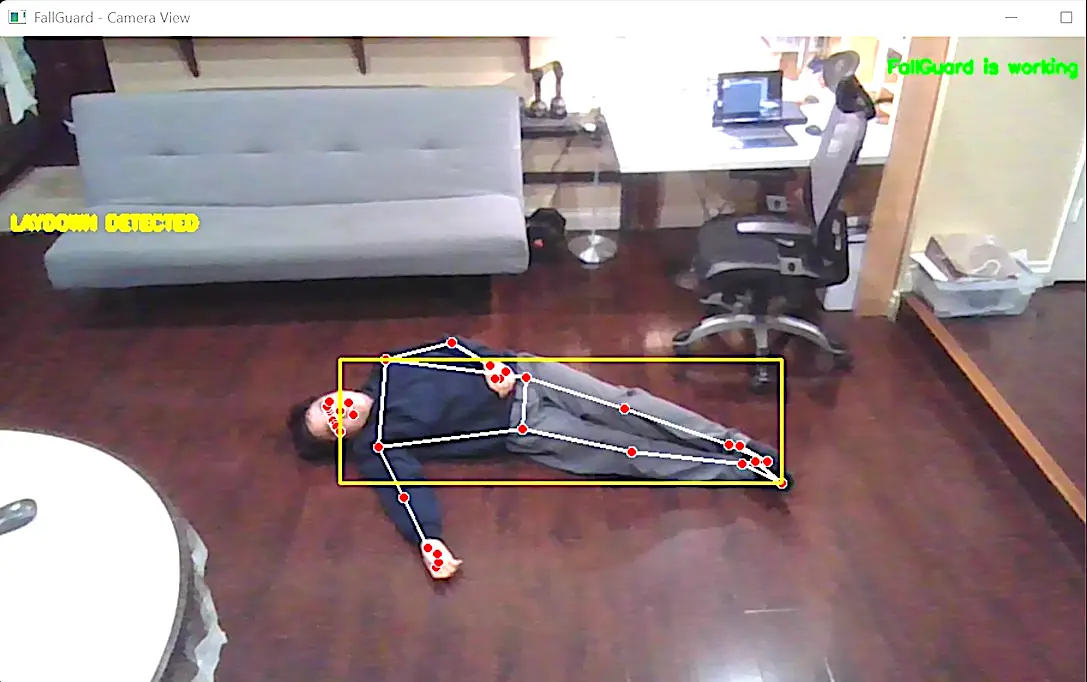
If the AI detects a lay-down event, it looks at the previous one second to check if the person’s velocity suddenly dropped, helping distinguish a fall from someone lying down intentionally.
There are still a few kinks Tang is ironing out to improve FallGuard’s reliability, he said.
Improving people’s quality of life
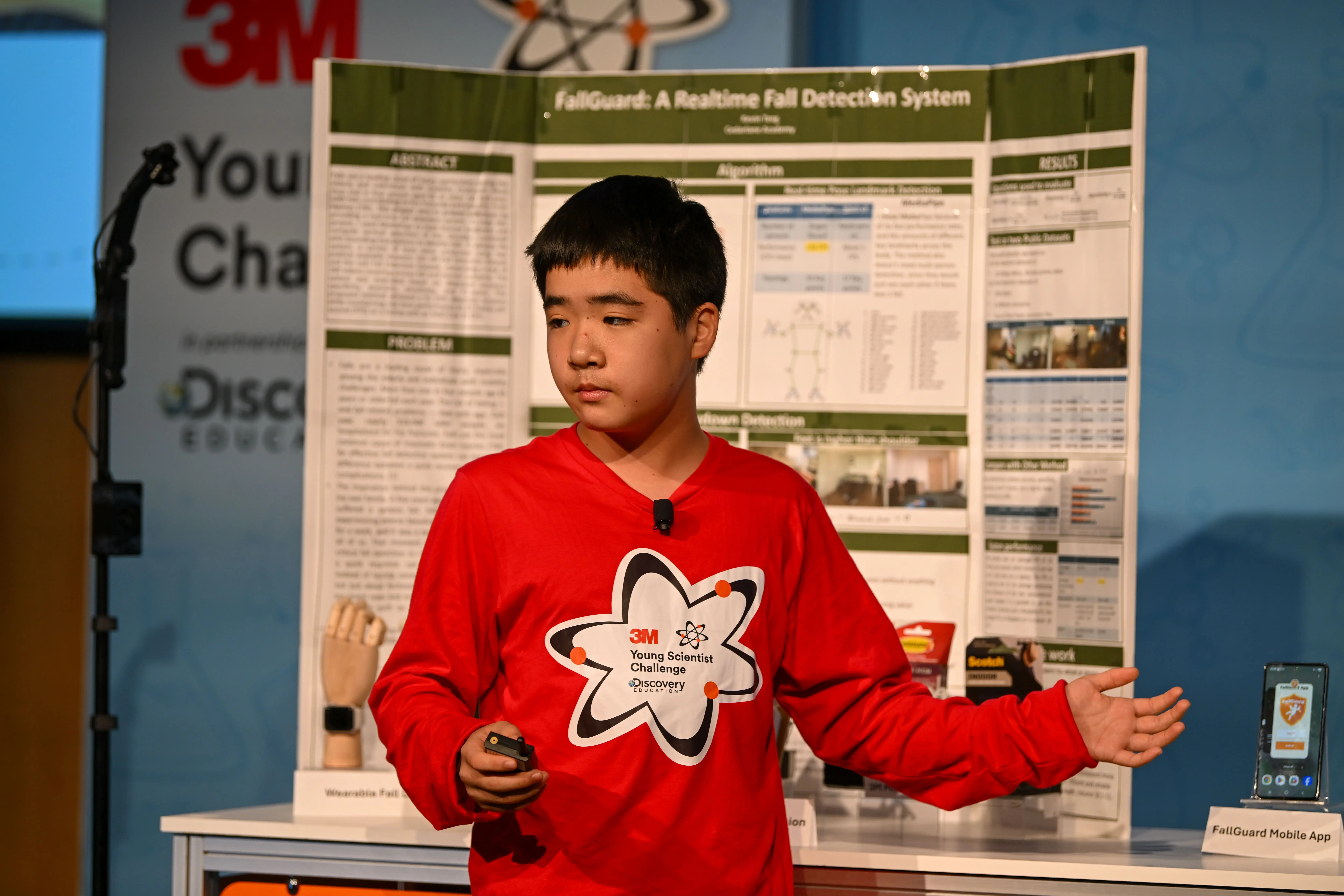
During the 3M Young Scientist Challenge, Tang was paired with Mark Gilbertson, a robotics and AI specialist at 3M, who mentored him on the project.
While Kevin did all of the programming and designing himself, Gilbertson said he helped with questions like how Tang should mount his device on the wall and what material to use.
From the start, Gilbertson said Kevin’s personality and project stood out to him. “I liked that his project had an emotional connection to his life,” Gilbertson told BI.
When Tang won the prize, he was excited that the news would alert more people about FallGuard who could use it, Gilberston said.
Indeed, Tang said he’s received interest from about 500 families so far. “One stood out to me was, this man who was trying really hard to take care of his wife, but he was deaf, so he wouldn’t hear his wife fall,” Gilbertson said, adding that the man noted, “This invention will just really change our lives and quality of living.”
One of the things Tang used the award money for was to purchase a MacBook to code the FallGuard app for computers, so people can convert their own computer into a FallGuard device. It works with most regular computers, he said.
When asked what he’s most proud of, Tang didn’t mention the prize, the title, or the media attention. Instead, he pointed back to the device itself, which hung on the wall behind him.
“I’m really proud of how much my project evolved from the very start,” he said. From a tripod and camera, to a mounted device, to an app anyone can download — each model improved on the one before. “I just kept working until I had a final product.”
Read the original article on Business Insider
The post A 13-year-old won $25,000 for his AI fall-detecting device. He used the money to develop a free app. appeared first on Business Insider.