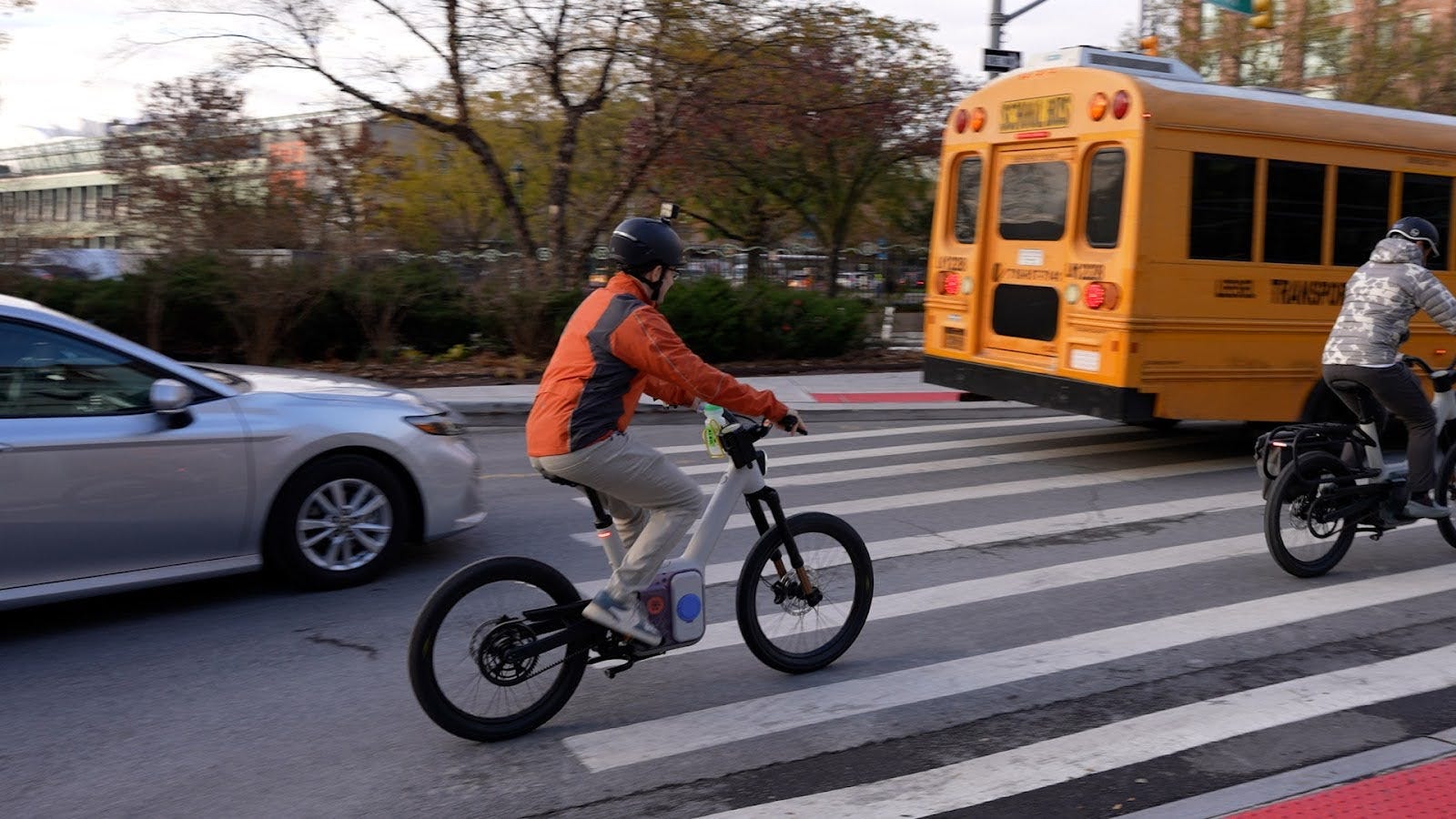
Many Americans view cars as a necessity. But for me, and millions of other people, bikes are how we get where we need to go.
My steel Fuji road bike is like another limb. I use it to get to work, grab groceries, and pedal to see my friends. I can haul it onto the subway if I get tired, or if the weather takes a surprise turn for the worse. It’s cheap to maintain, and I can use it in place of a gym membership.
In New York City, where I live, e-bikes — the road bike’s zoomier cousin — are everywhere. They’re not just popular with the 135,000 members of Citibike, our city’s bike-share program; businesses have also embraced them. Many delivery workers use e-bikes to avoid our city’s awful traffic snarls, and giants like Amazon use them to drop off packages and reduce emissions.
So when one of my colleagues told me they’d been getting emails from Also, a new e-bike company, I couldn’t resist hopping in the saddle. I’ve been thinking about buying an e-bike, and the emails said Also’s bike, the TM-B, had some unique features. The fact that it had been spun out of Rivian, a $21 billion electric vehicle company, intrigued me.
Rivian has retained a minority stake in Also — as in, “you can drive a car, and you can also ride a bike.” Also uses the same battery cells as Rivian’s autos, and takes inspiration from the carmaker’s drive for simplicity. While many e-bikes are manufactured by traditional bike makers, Also sticks exclusively with electric-powered products. It has raised $305 million, according to Pitchbook.
Just before Thanksgiving, I met up with Saul Leiken, Also’s director of product, to learn about the new $4,500 TM-B and take it for a spin around Manhattan’s Chelsea neighborhood.
I came away surprised at how flexible it was, and thinking it could be a good add-on — or primary method of transportation — for many households across the US.
Like an electric car, it’s highly computerized
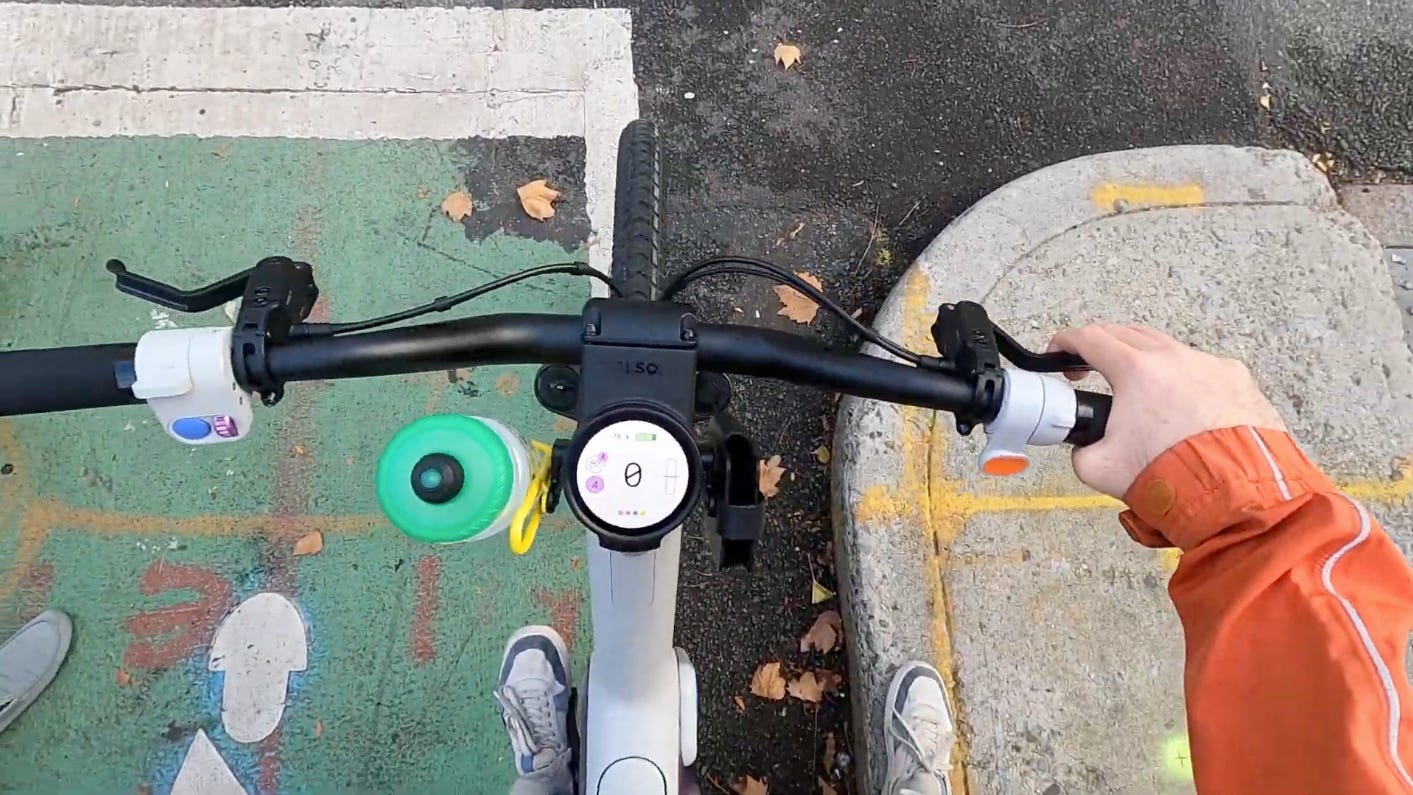
All e-bikes are complex pieces of machinery compared to normal bikes. In pedal-assist modes — when the motor only kicks in when you turn the pedals — the bike needs some way to process and interpret how hard you’re pedaling to decide how much to help you. Those sensors need to be able to “talk” to the motor.
The TM-B, which stands for “Transcendant Mobility Bike,” operates on an entirely different level from your typical e-bike. The pedals don’t connect to a chain; they power a generator and provide input to a computer system that tells the motor how much juice to give the bike, a system the company calls “DreamRide.” If there are updates, they’ll be delivered over-the-air, like with your smartphone — or, increasingly, your car.
“Everything’s software-defined,” said Leiken, who also joined me on a test ride.
It struck me how digitized everyday transportation is becoming. Even gas-burning cars don’t have direct, mechanical links between the steering wheel and the wheels or even the gas pedal and the engine. It’s all digital, or “drive by wire.” That makes the TM-B “pedal by wire.”
Riding felt natural
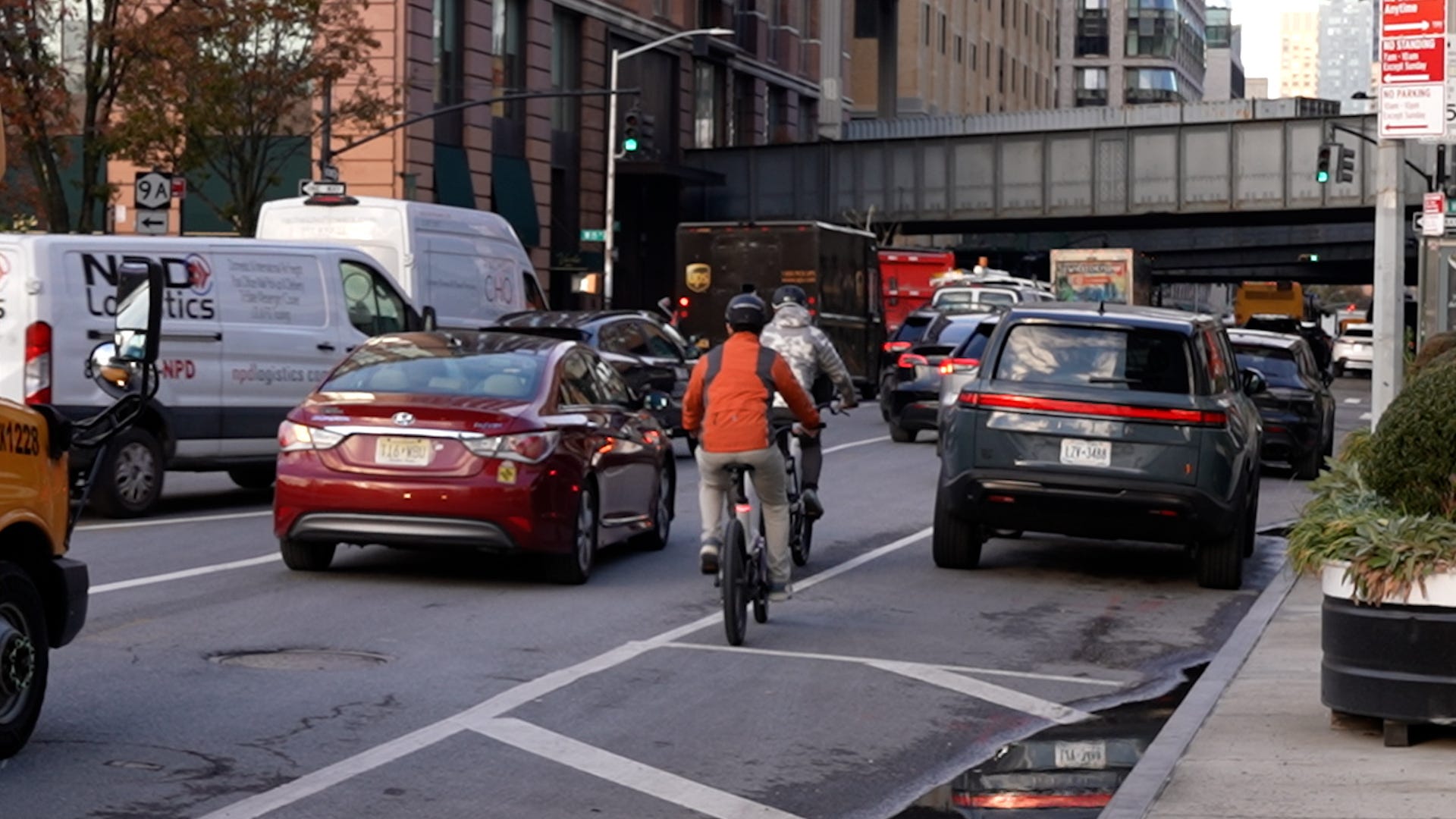
I started out riding the TM-B in “All Purpose” mode. I relied on pedal assist, and I changed the levels by tapping a small screen at the top of the bike’s head tube. It didn’t feel like I was giving instructions to a computer; it felt like I was pedaling.
The part of Manhattan we were riding in was pretty flat, and it was a somewhat chilly day. Even if I’d been using a normal bike, I probably would not have broken a sweat. But the assist from the DreamRide would be welcome on a warmer day, and I could see it propelling me over the Manhattan Bridge if I wanted to get to Brooklyn without much effort.
Later on, we tried the TM-B’s “Sport” mode, which approximates the experience of a standard, geared bicycle. There’s no chain to clank around to let you know you’ve switched gears, but there is haptic feedback, just like on your smartphone, that courses through the pedals.
The bike is speedy, but compliant
State and local e-bike regulations are evolving, but in most states, there are three classes of e-bike, and the TM-B is what’s called a “Class 3” e-bike, capable of hitting speeds up to 28 miles per hour. That’s about as fast as a car will ever go in most places in New York City, except for a highway or a boulevard in one of the outer boroughs — in the middle of the night.
I inched toward that top speed at a couple of points during our 30-minute ride. Once, early on, I cranked the pedal-assist level to its max. I was only going in the mid-20s, but still beating traffic because bikes are simply more nimble than cars, until we hit a red light.
Later, when we were going west along a large block, I remembered to hit the throttle — a little orange button near my right thumb designed to take me up to 20 miles per hour.
It gave me a real rush; it felt almost like riding a motorbike, which I hadn’t done in years. At the same time, I knew I had to be attentive, for my own safety and that of others.
The e-bike business is competitive
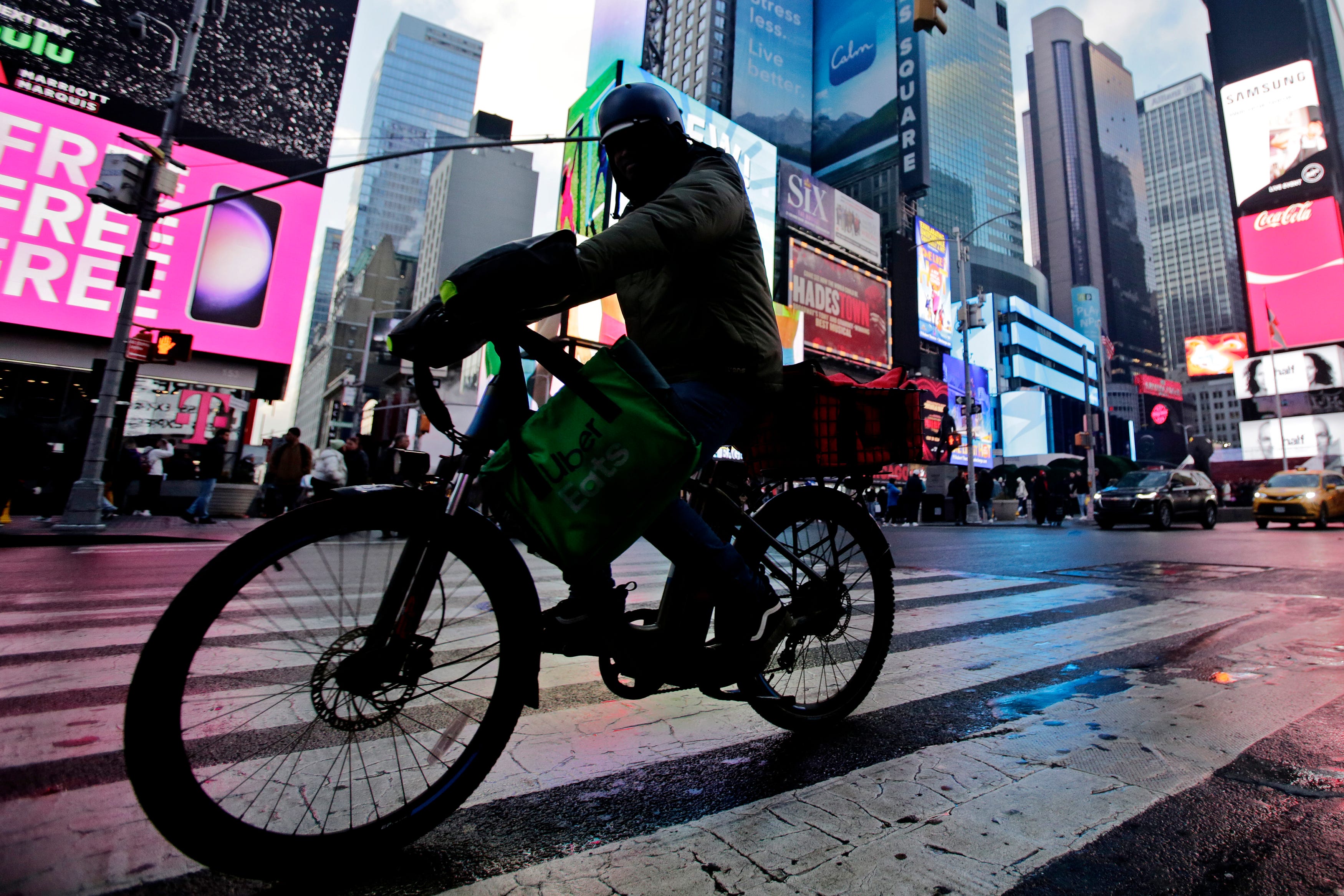
Nationwide, estimated e-bike sales are between 1 million and 2 million a year. It’s hard to be precise, partly because the market has so many players, and partly because customs data is incomplete and lumps e-bikes into a larger category of imports, according to eCycle Electric, a consulting firm. What’s clear is that it’s growing: eCycle predicts that sales will grow 14% to 25% per year until 2030.
Some e-bike companies have run into trouble. Recently, Techcrunch reported that Rad Power Bikes, which says it has 680,000 customers, could run out of money by January 2026. VanMoof, a Dutch e-bike brand whose sleek rides stood apart from competitors with chunky batteries and conspicuous wiring, went bankrupt in 2023, and its new owners are trying to reestablish themselves.
When I asked Leiken about this, he said Also’s timing was better — some e-bike companies built too much during the pandemic and were desperate to unload inventory afterward — and its business model is less reliant on partners. The bike’s adaptability struck me as a potential selling point, too: It can ride on roads, rutted streets, and trails, and can be used for a workout or a quick errand.
Also is iterating and developing new products
Some things about the bike weren’t final. The bell is digital, emitted by a speaker, and Leiken told me they were considering tweaking the tone and modifying it so that, if you hit it hard, it would sound like a car horn. It reminded me of how electric car manufacturers have created custom sounds to alert pedestrians at low speeds, as required by federal regulations.
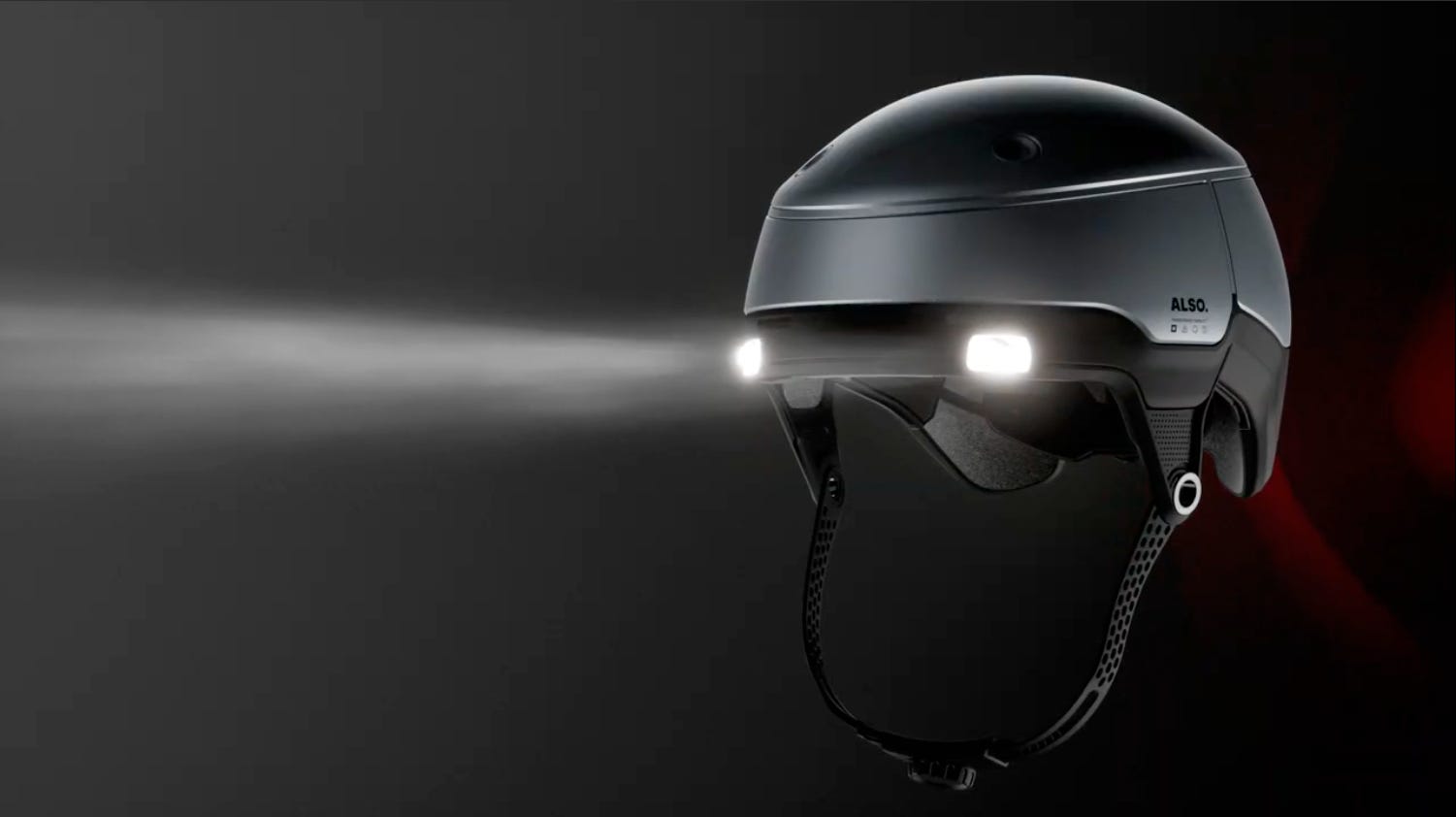
Also has also rolled out a helmet, called the Alpha Wave. It has built-in front and rear lights meant to catch drivers’ attention, speakers, and a noise-cancelling mic. While simple bike helmets provide some degree of protection in case of a collision, Also’s helmet has a new technology called the Release Layer System that’s meant to reduce the risk of traumatic brain injury.
The bike’s flexibility means a lot of people could love it
There’s a learning curve to bike ownership, and Also seems focused on flattening that curve.
While I didn’t have the controls down pat in a roughly 30-minute ride, I felt completely safe the whole time, and I’m sure I would’ve gotten the hang of it in another hour. For a novice rider, it might take longer, and it would be smart to start in a park or a parking lot before mixing with traffic.
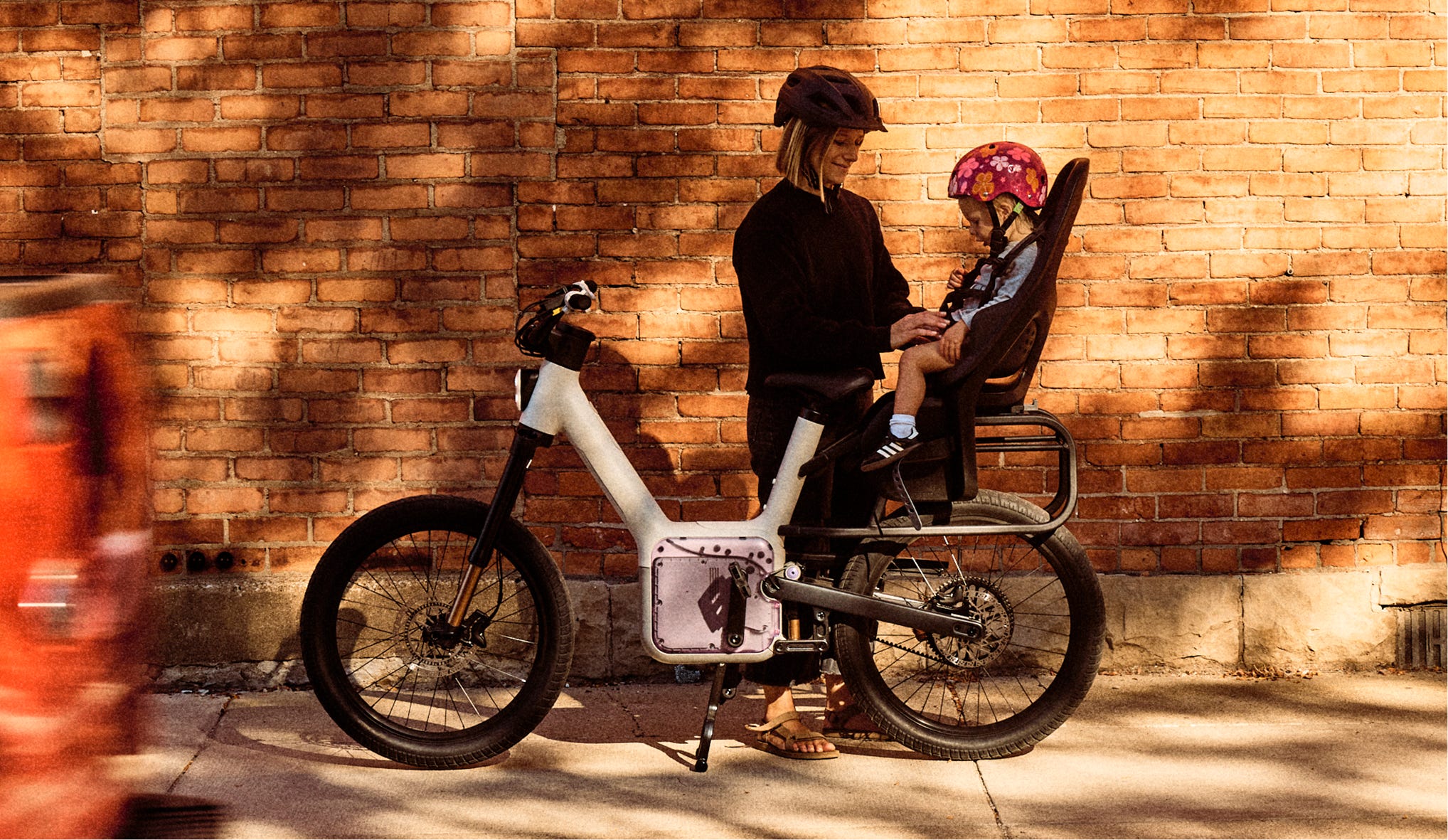
One of the more intriguing aspects of the bike was its swappable “top frames.” With a couple of taps, you can replace the seat with one for a much larger or much smaller rider. You can also swap in a roomier bench seat, or a seat with a utility rack to schlep cargo or a kid. It slots in like a ski boot, with a mechanical lock and an electrical connection to power the back lights on the bike. I’m not aware of any e-bikes with a similar feature.
The point of the TM-B wasn’t just to create a fun ride, Leiken said. It was to further the idea of “bikes as transportation” — as something that can actually replace a car for local trips. While $3,500 is nothing to sneeze at, Leiken said the company wanted to bring a “super-premium feature set and experience” to riders. He said bikes with similar features are usually more like $8,000. Besides, a used car will set you back $25,000 on average, and an average new car is $50,000.
I’ve long thought that e-bikes are generally good to have in society, and that they could replace a great deal of car trips. I’ve occasionally mulled buying one, but I feel like, as a fit person in my 30s, it might be overkill.
The TM-B didn’t radically change my mind. I’m still undecided on buying an e-bike — I really love my Fuji road bike — but it could be good for someone who wants an e-bike that can do it all. It’s a flexible workhorse, and given how pricey cars are getting, I think a lot of people could justify the price tag.
Read the original article on Business Insider
The post A Rivian spin-off is betting $305 million on e-bikes. I rode it around New York City, and it felt natural — and powerful. appeared first on Business Insider.