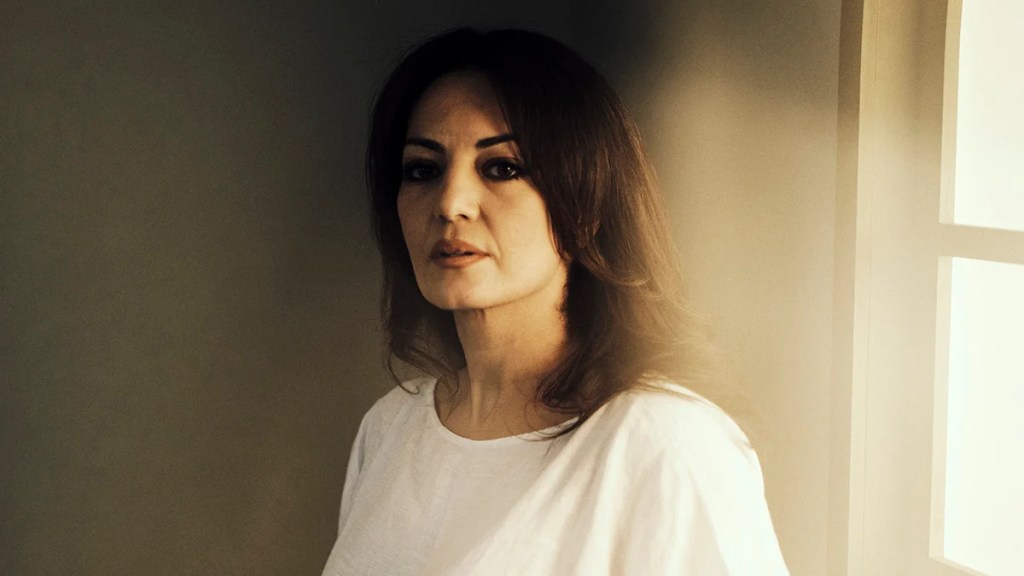
Over the past nine years, films by Maryam Touzani have represented Morocco three times in the Oscar race (2019’s “Adam,” 2022’s shortlisted “The Blue Caftan” and now “Calle Málaga”), as have three by her husband, Nabil Ayouch. In Touzani’s new film, veteran Spanish actress Carmen Maura (“Women on the Verge of a Nervous Breakdown”) plays Maria Angeles, an elderly woman in Tangier being forced out of the apartment she’s lived in for decades.
One of the most unexpected crowd-pleasers on this fall’s festival circuit, the film premiered in Venice and won audience awards at the Venice, Mill Valley and Mar del Plata festivals.
If you read a synopsis of this film, you’d think it must be grim and depressing. And yet there’s such vibrancy and life in it.
Thank you. I wrote the film after my mom passed, so it was born out of grief and loss. I started writing it instinctively, because I needed to put words and images to what I felt. And my mom was really lively, warm, loving and full of life. I unconsciously felt the need to transform the pain I was feeling into a celebration of life. That’s why I think the film contains this kind of joie de vivre.
Is it hard to find that balance when you are writing something that comes out of grief?
I think that balance came naturally. When I was writing, I would literally not know where I was going when the characters started to take shape. Maria started to be born out of my memories. There’s a lot of my mother in her, there’s a lot of my grandmother. My grandmother was Spanish and I grew up speaking Spanish at home. So it also came out of the need to continue hearing the language.
As I was writing, it’s true that it was very, very intense and painful and difficult. But at the same time, I had the freedom of letting myself get carried by this woman into her life – letting her take me places and make me laugh and make me cry.
How did you come to cast Carmen Maura?
I didn’t have her in my head as I was writing, but when I met her, I fell absolutely in love with her because I felt that she had this desire for life, this lightness about her. When I looked in her eyes, I felt that there was this little girl inside her still, as well as the lady that she is today.
Maria Angeles is a woman of character; she’s anchored in her beliefs and she will not sway. And I felt that about Carmen, too. She’s not going to give in — not to people’s expectations, not to society’s expectations of old age. There’s a lot of pressure for the elderly to be a certain way, to act as if life was finished. But I think as long as we are alive, as long as we’re breathing, as long as we have a heart that’s beating, we have to be open to what life has to give us.
The character of the antiques dealer played by Ahmed Boulane also upends expectations. We initially see him as somebody who’s taking advantage of Maria Angeles, but he turns out to be a lovely man and a true romantic lead.
Oh, yeah. When I was writing and this man appeared in my imagination, I didn’t sit and think about the journey he would have. That’s why I love writing. I have the feeling that I’m experiencing the film as I write it with my characters. I like the fact that we a lot of times have preconceived ideas, but if we know how to look, sometimes we can be surprised by other things that come out. I think it’s also unconsciously about challenging the way we look at things through this character.
And again, he’s part of also challenging the way we look at aging and the way we look at sexuality. When we are young, sexuality is celebrated. We speak about it very openly. But then when it comes to elderly people, there’s this kind of taboo around it where it becomes something almost shameful to talk about. As if it’s something that should be erased with old age.
I feel that’s such an injustice and so unnatural, and I really wanted this film to be a celebration of old age. There’s so much beauty in old age and I feel that we tend to hide aging bodies in film as if it’s out of fear of seeing our own end. And I think we have to be at peace with that. I think aging is beautiful. I think it’s a privilege to age. I think every wrinkle on our face is really a testament to the life we’ve lived. And so for me it was also challenging to convey this vision through these characters.
The film is set in a community in Tangier that you know well, isn’t it?
Definitely. I grew up in Tangier, which is quite international. And I grew up with my grandmother’s friends. A lot of them were Spanish, in this large Spanish community that I’ve seen becoming smaller year after year. A lot of the children leave, because they do not understand the visceral bond their parents had to Tangier. I wanted to explore the feeling of belonging and talk about this community that very few people know about.
It’s also a very active, crowded community. How difficult is it to shoot in such crowded streets and markets?
It’s definitely a challenge to shoot in natural settings, but that’s the only way I like to shoot. I need to feel the soul of a place if I’m going to shoot there. And in a location like this, what you’re shooting is alive. You have to take what your environment gives you and integrate it. I spend a lot of time just listening to the neighbors, looking out the window, listening to the noise. I need to feel that I’m a part of the environment, not that I’m just arriving with a camera.
A version of this story first appeared in the Below-the-Line/Documentaries/International issue of TheWrap’s awards magazine. Read more from the issue here.

The post How Maryam Touzani Took Her Grief and Found Life and Sexiness in ‘Calle Málaga’ appeared first on TheWrap.