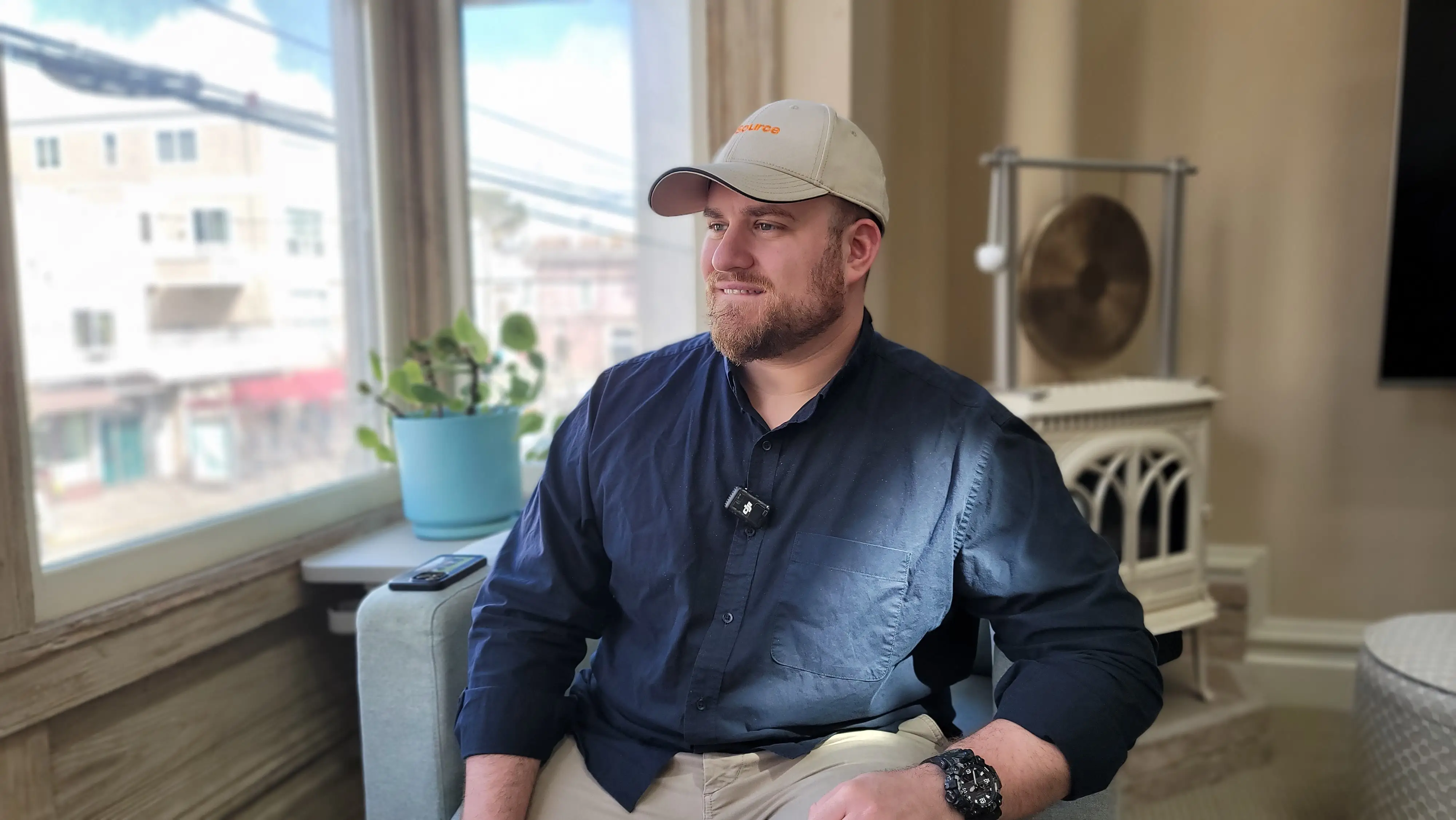
This as-told-to essay is based on a conversation with Spencer Penn, the 33-year-old founder of LightSource, who lives in San Francisco. It’s been edited for length and clarity.
I moved to California 10 years ago, back when Tesla was a boutique car business. We were making 1,000 vehicles a week.
My friends and family were telling me it was a big career mistake to work at Tesla. They said it would never be someone’s main car, that it’s a tech toy, that it’s an iPad with wheels on it. But I was just excited to see what this Elon guy was up to.
My interactions with Elon were always very positive, but I’m not a fanboy. There were some things that were very notable about his leadership style.
Tesla is a very flat organization. When I was there, even relatively young and out of college, it was two levels between Elon and me. That’s very unusual to have such close proximity so early in your career.
Just because it’s a flat org structure, doesn’t mean it’s a horizontal power dynamic. Elon is the king. What he says goes. If you wanted to get something done, you really did have to go through Elon.
The drawbacks were that the guy didn’t have that much time. In 2017, he was running three different companies: Tesla, SpaceX, and Neuralink. He was just getting started with OpenAI. He had two and a half days a week to really focus on Tesla exclusively. You’d have to get things approved in that period of time.
But he was also very focused on the product. He would get involved in the way that things felt. If you wanted to change a texture on a paint, you’d want to get his buy-in.
Many CEOs go the opposite direction. They let themselves get so far removed from the product. Elon always felt the product was the thing, and the innovation would be what drives the company forward.
I like to embody that here at our company. I still do demos. If you take your hands off the wheel, things might veer in a direction you don’t like.
Elon has a knack for setting overly ambitious goals. There are benefits and drawbacks. Sometimes, you lose credibility. Certain products like the new Roadster were unveiled back when I was an employee, and they’ve yet to be delivered.
But there are certain things where you shoot for the moon and you do hit the stars. Nobody thought Starlink would be as successful as quickly as it has been.
If you apply the right amount of pressure, you can see where the leaks are. That kind of ambition is everything.
That’s the final thing Elon does: he’s really a risk taker. He’s bet the company multiple times; he always keeps putting the chips back on red. I think about that a lot. Sometimes it can be hard for professional management to take the risks they need to. Sometimes you can sleepwalk into a long-term, uncompetitive position.
There was some internal signaling. People knew that Elon was in the factory. They knew that he was going to stay there until the issues were fixed. Elon works about as hard as any human on earth possibly can.
There’s a hotel right across the street from the Fremont factory. Part of me always felt like, instead of setting up pillows in a conference room, I would like our CEO to be well-rested and go to the hotel five minutes away. But the signaling was very potent.
I try to embody that to some degree here, too. I like to come into the office five days a week. I want people to know that I’m coming in early and I’m staying late. I unload the dishwasher in the office. I’m assembling IKEA furniture.
How I found Waymo compared
Waymo was a very different organization. It’s a very vertical org structure. Google is a large organization with lots of levels, and that translated directly to Waymo, which is a much smaller business.
Even though it’s a very vertical org structure, it’s a horizontal power structure. It’s like it’s rotated 90 degrees from Tesla.
Some people compared the org to slime mold. It starts to spread and find all the crevices on its own. Individual contributors could construct their own ideas.
There are benefits and drawbacks. There is the possibility that there are duplicative teams doing the same things in different ways. But it also leads to a lot of creativity.
At Tesla, it was very clear that Elon and his lieutenants were driving a lot of the decisions. The decisions that the more junior people made would be incremental. At Google, I found that a lot of the best ideas come from the individual folks in the business, because they’re given the freedom to roam.
In a startup, you have limited resources. You have to be focused, but a lot of the best ideas come from experimentation.
We had an engineer who asked if he could move his start date by a month. He was like, “I want to spend a month before I get into work catching up on everything that’s happening in AI.” He came to the table, and he had so deeply immersed himself that he had a lot of new and fresh ideas. Many of those ideas have become product features.
I have to delegate innovation to folks on the team to find those opportunities. That’s something I learned from Google.
Read the original article on Business Insider
The post I worked at Tesla and Waymo. Here are the leadership lessons I bring to my startup. appeared first on Business Insider.